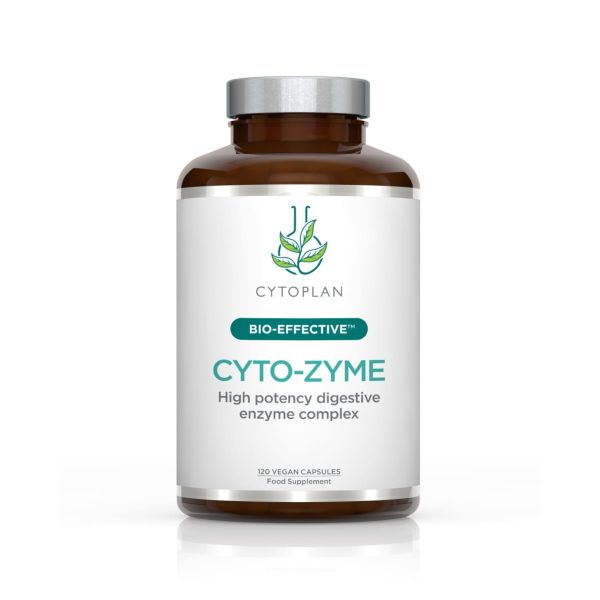
Cyto-Zyme
High potency broad spectrum digestive enzyme complex with hydrochloric acid. Supports healthy digestion and optimal nutrient absorption.
- High potency digestive enzymes
- With hydrochloric acid
- Supports digestion and absorption
Supports healthy digestion
Helps reduce bloating, gas and indigestion by promoting more efficient breakdown of food.
Enhances nutrient absorption
Aids in the absorption of key nutrients like vitamin B12 and iron.
Ideal for enzyme support
Beneficial for individuals with lactose intolerance, pancreatic insufficiency or age-related enzyme decline.
Cyto-Zyme is a high potency broad spectrum plant-sourced digestive enzyme complex providing 7 digestive enzymes - bromelain, lipase, protease, amylase, papain, lactase and cellulase. Additionally, it contains hydrochloric acid (as betaine hydrochloride) which is produced by the stomach as a vital part of the digestive process, to further support digestion. As we age, our body's natural production of stomach acid and digestive enzymes decreases. Various factors can impact digestive capacity, including age, stress, medications, and insufficient nutrient intake. It can also be used at time of indulgence to support digestion. Cyto-Zyme provides a range of enzymes, promoting better digestive health and nutrient absorption.
What do digestive enzymes do?
Digestive enzymes are naturally produced by the body to break down food into its basic components, enabling their absorption through the gut wall. There are various types of digestive enzymes, including amylase, which breaks down carbohydrates; protease, which breaks down proteins; lipase, which breaks down fats; and lactase, which breaks down lactose found in dairy products.
Benefits of digestive enzymes
Digestive enzymes play a crucial role in enhancing the efficiency of food breakdown and improving overall digestion. Here are some key benefits:
Improved digestion: Digestive enzymes help reduce symptoms such as bloating, gas, and indigestion by breaking down food more effectively.
Optimised nutrient absorption: By facilitating the breakdown of food into its basic components, digestive enzymes ensure optimal absorption of nutrients, which is vital for overall health.
Support for enzyme insufficiencies: Individuals with enzyme insufficiencies, such as lactose intolerance or pancreatic insufficiency, may benefit significantly from supplemental digestive enzymes.
Are the enzymes vegan or animal source?
Some digestive enzymes are sourced from animals, but Cyto-Zyme is sourced entirely from plants making it suitable for vegans.
Dosage:
How to take:
Suitability:
| Active Nutrient | Strength | %NRV* |
| Bromelain (providing GDU) | 100mg | 120 GDU |
| Lipase | 100mg | 1000LU |
| Protease | 100mg | 1000 HUT |
| Amylase | 100mg | 5000 SKB |
| Betaine hydrochloride | 75mg | 75mg |
| Papain (providing protease) | 50mg | 100000 MSP |
| Lactase | 10mg | 650 ALU |
| Cellulase | 0.30mg | 0.9 CU |
|
+NRV = Nutritional Reference Value * Indicates no NRV |
||
Capsule shell (plant cellulose), lipase,protease,amylase,bromelain,betaine hydrochloride, bulking agent ( microcrystalline cellulose), papain, anti-caking agent ( ascorbyl palmitate, silicon dioxide), lactase,cellulase.
Vegetarians, vegans and for people with Candida and yeast sensitivities.
This product is not recommended for children under 12 years old, pregnant or lactating women. DO NOT TAKE IF PEPTIC ULCERS ARE PRESENT OR SUSPECTED. Do not use if there is a hiatus hernia or any inflammation of the digestive tract. Do not remove contents from the capsule.
bulking agent (microcrystalline cellulose), anti-caking agent (ascorbyl palmitate, silicon dioxide), plant cellulose (capsule shell).
GMO, wheat, soy, dairy, added sugar, colourings & flavourings.
Keep cool, dry & out of direct sunlight.
Inspired by nature, backed by science, loved by you
Excellent

Looking for FREE tailored advice?
Our on-site team of Nutritional Therapists is here to answer your health questions.
Bio-Effective® Supplements
Our Bio-Effective® formulas are optimally absorbed and recognised by your body, so they can be used exactly where they’re needed most.
Formulated by Nutritional Therapists, we use only what’s needed to create clean products, free from unnecessary additives.
We combine nutrients and wholefoods with purpose, working in synergy with the body and harnessing the power of nutrition science and nature - resulting in exceptional products that make a real, lasting difference to health.
 Optimum potency for optimum health
 Premium ingredients that work
 Clean products, with no unnecessary extras
 Unique formulations backed by science
Practitioner Recommended
For over 35 years, our community of 6,000+ practitioners have used Cytoplan products to support their clients. All formulations can be used in a clinic setting, but are designed to benefit everyone.


As featured in





 Ethically driven, charity-owned
Every purchase channels money to support health and wellbeing projects across the UK
Ethically driven, charity-owned
Every purchase channels money to support health and wellbeing projects across the UK
 Practitioner recommended
For over 35 years, our community of 6,000+ practitioners have used Cytoplan products to support their clients
Practitioner recommended
For over 35 years, our community of 6,000+ practitioners have used Cytoplan products to support their clients
 Independently tested & UK made
From our manufacturing facility in Worcester, we operate to the highest food quality standards
Bio-Effective® supplements
Our Bio-Effective® formulas are optimally absorbed and recognised by your body
Independently tested & UK made
From our manufacturing facility in Worcester, we operate to the highest food quality standards
Bio-Effective® supplements
Our Bio-Effective® formulas are optimally absorbed and recognised by your body
FAQ’s
What do digestive enzymes do?
Digestive enzymes are naturally produced by the body to break down food into its basic components, enabling their absorption through the gut wall. There are various types of digestive enzymes, including amylase, which breaks down carbohydrates; protease, which breaks down proteins; lipase, which breaks down fats; and lactase, which breaks down lactose found in dairy products.
What are the benefits of digestive enzymes ?
Improved digestion:
Digestive enzymes help reduce symptoms such as bloating, gas, and indigestion by breaking down food more effectively.Optimised nutrient absorption:
By facilitating the breakdown of food into its basic components, digestive enzymes ensure optimal absorption of nutrients, which is vital for overall health.Support for enzyme insufficiencies:
Individuals with enzyme insufficiencies, such as lactose intolerance or pancreatic insufficiency, may benefit significantly from supplemental digestive enzymes.Are the enzymes vegan or from an animal source?
Some digestive enzymes are sourced from animals, but Cyto-Zyme is sourced entirely from plants making it suitable for vegans.
How long does it take digestive enzyme supplements to work?
Digestive enzyme supplements typically start working shortly after reaching the stomach, often within the first 15–30 minutes. For optimal results, they should be taken just before or at the beginning of a meal to ensure they mix with food during digestion.
Who should take digestive enzyme supplements?
Digestive enzyme supplements can be helpful for people who have nutrient deficiencies, food intolerances or experience bloating, gas, or indigestion, especially after meals. They’re also useful for those with enzyme deficiencies, like lactose intolerance, or for anyone whose digestion may be affected by low stomach acid, age, stress, or certain medications. They can also be used at times of indulgence to support digestion.