
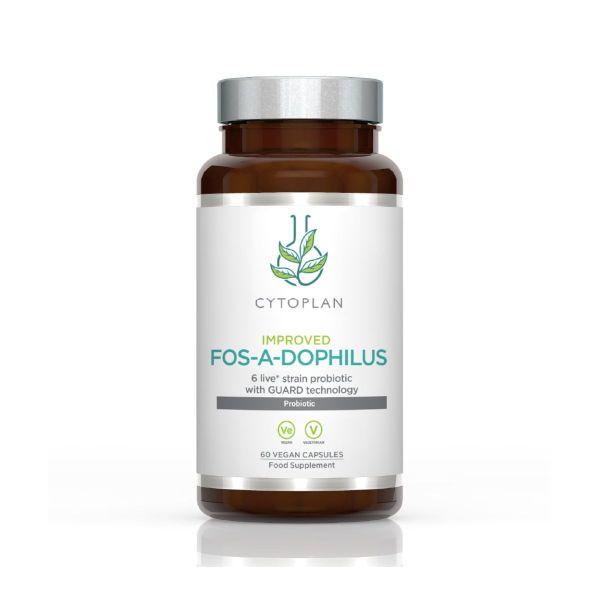
Fos-A-Dophilus Probiotic
A broad-spectrum daily probiotic from 6 clinically researched strains to support a healthy microbiome.
- Daily probiotic
- 6 strains, 4 billion bacteria
- Supports a healthy microbiome
Daily broad-spectrum probiotic
Provides 4 billion live bacteria per capsule from six clinically researched strains, offering broad-spectrum daily support.
Supports digestion and a healthy microbiome
Designed to nurture beneficial bacteria and support microbiome balance, important for digestion, optimal nutrient absorption and immunity.
Optimised probiotic survival
Protected by advanced GUARD™ technology to safeguard live bacteria through the stomach and ensure effective delivery to the intestines.
Vegan friendly
A vegan probiotic formulated without animal-derived ingredients and supplied in easy-to-take plant-based capsules.
About our daily probiotic
A healthy gut starts with a balanced microbiome. With 4 billion live bacteria per capsule from six clinically researched strains, Fos-A-Dophilus provides broad-spectrum probiotic support for digestive health and everyday wellbeing. Advanced GUARD™ technology helps protect the live bacteria during digestion, supporting their optimal delivery to the intestines where they can thrive. Naturally fermented and shelf-stable, it's an easy way to support your gut health every day, with no refrigeration required.
Why a healthy microbiome matters
Your gut microbiome, the community of bacteria living in your digestive system, plays a vital role in almost every aspect of health. A balanced microbiome helps optimise digestion and nutrient absorption, supports immunity and can even influence mood and energy levels. However, factors such as ageing, stress, diet and antibiotics can disrupt this delicate balance. Maintaining a diverse microbiome through natural probiotics helps maintain balance, supporting long-term digestive health and optimal wellbeing.
Take 1-2 capsules daily with food, or as directed by a practitioner.
| Active Nutrient | Strength | %NRV* |
| Bifidobacterium longum | 52% | * |
| Lactobacillus rhamnosus | 30% | * |
| Lactobacillus animalis ssp lactis | 10% | * |
| Bifidobacterium breve | 5% | * |
| Bifidobacterium infantis | 1% | * |
| Lactobacillus acidophilus | 2% | * |
|
+NRV = Nutritional Reference Value * Indicates no NRV |
||
Bifidobacterium longum (RO175), Lactobacillus rhamnosus GG, Lactobacillus animalis ssp lactis (lafti® B94), Bifidobacterium breve (HA-129), Bifidobacterium infantis (ROO33), Lactobacillus acidophilus (RO418), potato starch, NutraJIT® (GUARD technology), plant cellulose (capsule shell).
Vegetarians, vegans.
Do not exceed the recommended daily intake. Food supplements should not be used as a substitute for a varied and balanced diet and healthy lifestyle. If you are taking any medication, consult a doctor before use.
Potato starch, NutraJIT® (GUARD technology), plant cellulose (capsule shell).
Free from GMO, wheat, soy, dairy, added sugar, flavourings & colourings.
Keep out of sight and reach of children. Do not use if sealing strip is missing or broken. Best before date: see base of container. Store in a cool, dry, place.
Inspired by nature, backed by science, loved by you
Excellent

Looking for FREE tailored advice?
Our on-site team of Nutritional Therapists is here to answer your health questions.
Bio-Effective® Supplements
Our Bio-Effective® formulas are optimally absorbed and recognised by your body, so they can be used exactly where they’re needed most.
Formulated by Nutritional Therapists, we use only what’s needed to create clean products, free from unnecessary additives.
We combine nutrients and wholefoods with purpose, working in synergy with the body and harnessing the power of nutrition science and nature - resulting in exceptional products that make a real, lasting difference to health.
 Optimum potency for optimum health
 Premium ingredients that work
 Clean products, with no unnecessary extras
 Unique formulations backed by science
Practitioner Recommended
For over 35 years, our community of 6,000+ practitioners have used Cytoplan products to support their clients. All formulations can be used in a clinic setting, but are designed to benefit everyone.


As featured in





 Ethically driven, charity-owned
Every purchase channels money to support health and wellbeing projects across the UK
Ethically driven, charity-owned
Every purchase channels money to support health and wellbeing projects across the UK
 Practitioner recommended
For over 35 years, our community of 6,000+ practitioners have used Cytoplan products to support their clients
Practitioner recommended
For over 35 years, our community of 6,000+ practitioners have used Cytoplan products to support their clients
 Independently tested & UK made
From our manufacturing facility in Worcester, we operate to the highest food quality standards
Bio-Effective® supplements
Our Bio-Effective® formulas are optimally absorbed and recognised by your body
Independently tested & UK made
From our manufacturing facility in Worcester, we operate to the highest food quality standards
Bio-Effective® supplements
Our Bio-Effective® formulas are optimally absorbed and recognised by your body
FAQ’s
What are live bacteria?
Live bacteria are beneficial microorganisms that naturally occur in the gut microbiome. Probiotic supplements provide specific strains of live bacteria that help support a healthy and balanced microbiome.
Why do I need a daily probiotic?
Your gut microbiome plays an important role in digestion, nutrient absorption, immune function and overall wellbeing. Everyday factors such as stress, diet, travel, antibiotics and ageing can affect the balance of beneficial gut bacteria. Taking daily probiotic capsulescan help support a healthy, balanced microbiome and maintain digestive health as part of your everyday wellness routine.
What makes Fos-A-Dophilus different from other probiotics?
Our daily probiotic features six clinically researched probiotic strains, carefully selected for their quality, complementary characteristics and scientific research. Working synergistically, these strains provide broad-spectrum support for a healthy, balanced microbiome. Advanced GUARD™ technology helps protect the live bacteria during digestion, while the shelf-stable formula offers convenient daily probiotic support without the need for refrigeration.
Do probiotics survive stomach acid?
Not all probiotics survive the journey through the digestive system. Fos-A-Dophilus is formulated with advanced GUARD™ technology to help protect the live bacteria as they pass through the stomach, supporting their delivery to the intestines where they are needed most. This makes it an ideal choice for those looking for stomach acid resistant probiotics.
What is the difference between Lactobacillus and Bifidobacterium?
Lactobacillus and Bifidobacterium are two of the most researched groups of beneficial bacteria.Lactobacillusspecies are commonly found throughout the digestive tract, including the small intestine, while Bifidobacteriumspecies are among the most abundant beneficial bacteria in the large intestine. Together, they help support a healthy and balanced gut microbiome, which is why both are included in our multi-strain probiotic supplement.
How many probiotic strains does Fos-A-Dophilus contain?
Fos-A-Dophiluscontains six clinically researched probiotic strains, providing broad-spectrum support for a healthy and balanced gut microbiome. These includeLactobacillus rhamnosus, Lactobacillus acidophilus, Bifidobacterium bifidum, Bifidobacterium breve,Bifidobacterium infantis and Bifidobacterium longum.
This multi-strain probiotic supplement delivers 4 billion live bacteria per capsule.
Do I need to refrigerate my probiotic capsules?
No. Fos-A-Dophilus is shelf-stable and does not require refrigeration. The carefully selected probiotic strains are chosen for their stability and potency, making these daily probiotic capsules convenient to take at home, at work or while travelling.
Can I take Fos-A-Dophilus alongside antibiotics?
Yes. Fos-A-Dophiluscontains carefully selected probiotic strains that can be taken alongside antibiotics. To minimise interaction, we recommend taking your probiotic at least two hours before or after your antibiotic dose. If you're looking for more targeted microbiome support, you may wish to consider Recovery Biotic, our high-potency probiotic formula.
How long does it take for probiotics to work?
The effects of probiotics can vary from person to person, depending on factors such as diet, lifestyle and the existing balance of your gut microbiome. While some people notice changes quickly, for others it may take a few weeks of consistent use.
As the beneficial bacteria become established within the gut, some people may experience temporary changes such as mild bloating or changes in bowel habits. These effects are usually short-lived and should settle as your microbiome adapts.
Fos-A-Dophilus is designed for daily use, providing ongoing support for digestive health and microbiome balance.
When is the best time to take a daily probiotic?
Fos-A-Dophilus can be taken at any time of day. For best results, take it consistently as part of your daily routine and follow the directions on the label.
What is a broad-spectrum probiotic?
A broad-spectrum probioticcontains multiple strains of beneficial bacteria. By providing a diverse blend of probiotic strains, broad-spectrum formulas help support microbiome diversity and balance.
How many live bacteria does Fos-A-Dophilus provide?
Fos-A-Dophilus provides 4 billion live bacteria per capsule from six clinically researched probiotic strains.
Can I take Fos-A-Dophilus while travelling?
Yes. Because Fos-A-Dophilus is shelf-stable and does not require refrigeration, it is convenient to take when travelling or when you're away from home.
Can the capsules be opened?
Yes. If preferred, the capsule can be opened and the contents sprinkled onto cool food or mixed into a cold drink. Avoid adding the powder to hot foods or beverages, as excessive heat may affect the viability of the live bacteria.This can be a convenient option for those who have difficulty swallowing capsules.