
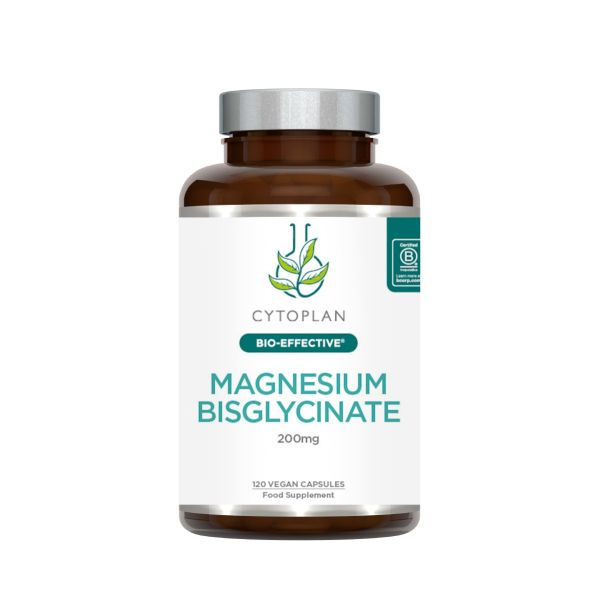
Magnesium Bisglycinate
Highly Bio-Effective® pure magnesium bisglycinate - an absorbable, gentle form of magnesium. Complexed with glycine for managing stress and supporting sleep.
- Pure high potency magnesium – 200mg
- Optimally absorbed, excipient free
- Targeted magnesium for stress & sleep
Promotes relaxation and sleep
Both magnesium and glycine work synergistically to help to calm the nervous system and promote restful sleep.
Supports mental wellbeing
Magnesium supports nervous system health and psychological function.
Highly bio-effective magnesium bisglycinate
Fully reacted magnesium bisglycinate for superior absorption and efficacy. Magnesium oxide and excipient-free.
About our Magnesium Bisglycinate
Magnesium bisglycinate is a highly bioavailable and gentle form of magnesium that’s easily absorbed and well tolerated by the body. In this advanced, ‘chelated’ form, magnesium is bound to glycine, a naturally calming amino acid, which enhances absorption making it a great all-round magnesium for everyone, but especially to help manage stress and support restful sleep. The chelation process creates a stable mineral complex that is absorbed more efficiently than many other magnesium forms, making it well suited to those with sensitive digestion. It provides an optimal 200mg of elemental magnesium per daily intake from fully reacted, pure magnesium bisglycinate, and is guaranteed ‘unbuffered’ and magnesium oxide-free.
Magnesium Bisglycinate Benefits
Magnesium bisglycinate helps manage stress and supports relaxation and restful sleep through its combination with the calming amino acid glycine. Magnesium also helps reduce tiredness and fatigue, contributes to healthy muscle function, and plays an important role in psychological wellbeing and nervous system function. It also supports the maintenance of strong bones and teeth through its role in calcium and vitamin D regulation.
Dosage:
Take 2 capsules daily
How to take:
Take with food or as directed by a practitioner
Suitability:
Vegans & vegetarians
| Active Nutrient | Strength | %NRV* |
| Magnesium | 200mg | 53 |
|
+NRV = Nutritional Reference Value * Indicates no NRV |
||
Magnesium bisglycinate, plant cellulose (capsule shell).
Vegans & Vegetarians
None.
Plant cellulose (capsule shell).
GMO, wheat, soy, dairy, added sugar, flavourings & colourings.
Store in a cool, dry place out of direct sunlight.
Inspired by nature, backed by science, loved by you
Excellent

Looking for FREE tailored advice?
Our on-site team of Nutritional Therapists is here to answer your health questions.
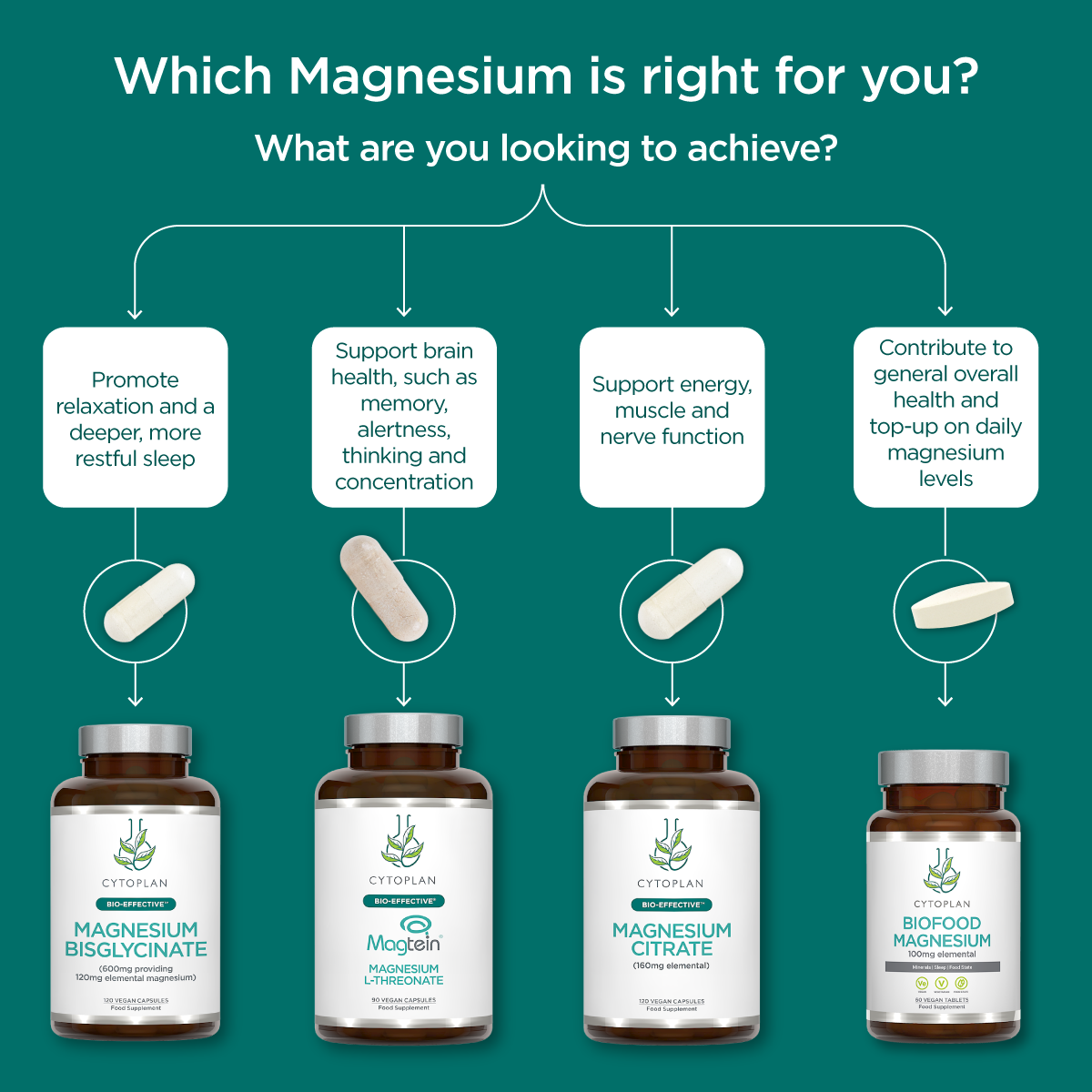
Confused about which magnesium supplement is right for you?
Magnesium Bisglycinate, Citrate, Magtein® or Biofood—they may all be magnesium, but each works differently. Choosing the right one can make all the difference in achieving your health goals.
Read on to discover the different types of magnesium and their benefits.
 Optimum potency for optimum health
 Premium ingredients that work
 Clean products, with no unnecessary extras
 Unique formulations backed by science
Bio-Effective® Supplements
Our Bio-Effective® formulas are optimally absorbed and recognised by your body, so they can be used exactly where they’re needed most.
Formulated by Nutritional Therapists, we use only what’s needed to create clean products, free from unnecessary additives.
We combine nutrients and wholefoods with purpose, working in synergy with the body and harnessing the power of nutrition science and nature - resulting in exceptional products that make a real, lasting difference to health.
As featured in





Practitioner Recommended
For over 35 years, our community of 6,000+ practitioners have used Cytoplan products to support their clients. All formulations can be used in a clinic setting, but are designed to benefit everyone.


 Ethically driven, charity-owned
Every purchase channels money to support health and wellbeing projects across the UK
Ethically driven, charity-owned
Every purchase channels money to support health and wellbeing projects across the UK
 Practitioner recommended
For over 35 years, our community of 6,000+ practitioners have used Cytoplan products to support their clients
Practitioner recommended
For over 35 years, our community of 6,000+ practitioners have used Cytoplan products to support their clients
 Independently tested & UK made
From our manufacturing facility in Worcester, we operate to the highest food quality standards
Bio-Effective® supplements
Our Bio-Effective® formulas are optimally absorbed and recognised by your body
Independently tested & UK made
From our manufacturing facility in Worcester, we operate to the highest food quality standards
Bio-Effective® supplements
Our Bio-Effective® formulas are optimally absorbed and recognised by your body
FAQ’s
What are the benefits of magnesium bisglycinate?
Magnesium contributes to normal psychological function, muscle function and supports the healthy functioning of the nervous system. In this chelated form, magnesium is bound to glycine - a calming amino acid that not only enhances absorption but also works in harmony with magnesium to help manage stress and promote relaxation and restful sleep. This gentle, highly bioavailable and well-tolerated form is ideal for those who are sensitive to other types of magnesium, offering effective support with minimal risk of digestive discomfort.
Chelated magnesium bisglycinate - what is chelation?
Chelation is a chemical process in which minerals like magnesium bind to molecules such as amino acids (e.g., glycine) or organic acids to form a stable complex. Chelation creates a mineral complex that is more efficiently absorbed than other forms. As a result, chelated minerals are often more bioavailable and effective.
Magnesium bisglycinate is a chelated form of magnesium, in which each magnesium ion is bound to two glycine molecules. This structure not only enhances absorption but also makes it a gentle form of magnesium ideal for individuals who may not tolerate other forms of magnesium well.
Is your magnesium bisglycinate ‘fully reacted’/magnesium oxide free?
Cytoplan’s Magnesium Bisglycinate is fully reacted magnesium bisglycinate with NO magnesium oxide present, meaning that every molecule of magnesium is optimally absorbed and bio-effective.
Standard forms of magnesium bisglycinate may not be ‘fully reacted’ since there are multiple factors that affect how complete the reaction occurs between the magnesium and glycine molecules. Additional processing is required to maximise the reaction process. This is fairly typical of most magnesium bisglycinate on the market which often contains a percentage of poorly absorbed magnesium oxide. Sometimes this is referred to as ‘buffered’ magnesium.
Am I getting enough magnesium?
Despite its importance, many people aren’t getting enough magnesium. Poor diet, soil depletion, food processing and cooking techniques have significantly reduced magnesium levels in our diets. Additionally, stress and busy lifestyles further increase our need for this essential mineral, by using more of it up. Often there may not be enough magnesium in a multivitamin, so adding a magnesium product to your other daily supplements can ensure you get enough of this essential nutrient.
Magnesium bisglycinate vs magnesium glycinate: What's the difference?
Magnesium bisglycinate and magnesium glycinate refer to the same compound, and the terms are often used interchangeably. The word “bisglycinate” is just the more technical name. It means that the magnesium is attached to two glycine molecules with "bis" meaning "two." There’s no difference in how they work or the benefits they provide. It’s purely a difference in terminology.
Does magnesium bisglycinate help with sleeping?
Magnesium contributes to the reduction of tiredness and fatigue, which can make it easier to unwind at night, and it supports normal psychological function, helping maintain mental balance in ways that can benefit the ability to fall asleep. It also contributes to normal muscle function, which can ease nighttime restlessness or tension, and to the normal functioning of the nervous system, which plays an important role in settling into a relaxed state before bed. Combined with glycine, also known for promoting relaxation, magnesium bisglycinate offers several mechanisms that can make it helpful for encouraging more restful, restorative sleep.