
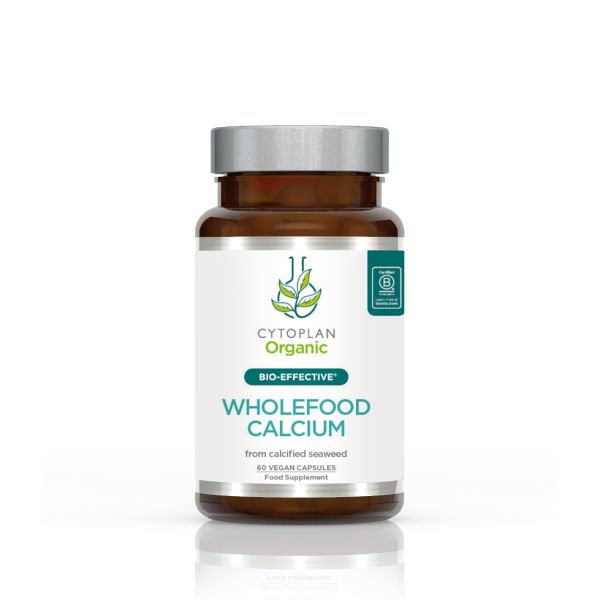
Organic Wholefood Calcium
Organic Wholefood Calcium is a highly soluble natural calcium supplement for optimal absorption, supporting bone and muscle health.
- New organic formulation
- A wholefood supplement
- A natural seaweed product harvested under an exclusive license
High potency
200mg of elemental calcium per capsule.
Wholefood seaweed calcium
Seaweed calcium is a natural source of magnesium and over 70 other trace minerals. Its porous structure allows calcium to dissolve more readily, enhancing digestion, absorption and utilisation.
Organic
Certified organic by the Soil Association.
Organic Wholefood Calcium is a gentle and Bio-Effective® natural calcified seaweed product, providing 200mg of elemental calcium per capsule.
Wholefood ‘marine calcium’, derived from seaweed from clean Icelandic water. Seaweed calcium is a natural source of magnesium and over 70 other trace minerals. Its porous structure allows calcium to dissolve more readily in the stomach, enhancing digestion, absorption and utilisation.
Certified organic by the Soil Association.
1-2 capsules daily or as directed by a practitioner.
| Active Nutrient | Strength | %NRV* |
| Organic calcified seaweed | 1250mg | * |
| Providing Calcium | 400mg | 50 |
|
+NRV = Nutritional Reference Value * Indicates no NRV |
||
Organic calcified seaweed (lithothamnion Sp.) providing calcium, plant cellulose (capsule shell).
Vegetarians, vegans and for people with candida and yeast sensitivities.
None.
Plant cellulose (capsule shell).
GMO, wheat, soy, dairy, added sugar, colourings & flavourings.
Keep cool, dry & out of direct sunlight.
Inspired by nature, backed by science, loved by you
Excellent

Looking for FREE tailored advice?
Our on-site team of Nutritional Therapists is here to answer your health questions.
Bio-Effective® Supplements
Our Bio-Effective® formulas are optimally absorbed and recognised by your body, so they can be used exactly where they’re needed most.
Formulated by Nutritional Therapists, we use only what’s needed to create clean products, free from unnecessary additives.
We combine nutrients and wholefoods with purpose, working in synergy with the body and harnessing the power of nutrition science and nature - resulting in exceptional products that make a real, lasting difference to health.
 Optimum potency for optimum health
 Premium ingredients that work
 Clean products, with no unnecessary extras
 Unique formulations backed by science
Practitioner Recommended
For over 35 years, our community of 6,000+ practitioners have used Cytoplan products to support their clients. All formulations can be used in a clinic setting, but are designed to benefit everyone.


As featured in





 Ethically driven, charity-owned
Every purchase channels money to support health and wellbeing projects across the UK
Ethically driven, charity-owned
Every purchase channels money to support health and wellbeing projects across the UK
 Practitioner recommended
For over 35 years, our community of 6,000+ practitioners have used Cytoplan products to support their clients
Practitioner recommended
For over 35 years, our community of 6,000+ practitioners have used Cytoplan products to support their clients
 Independently tested & UK made
From our manufacturing facility in Worcester, we operate to the highest food quality standards
Bio-Effective® supplements
Our Bio-Effective® formulas are optimally absorbed and recognised by your body
Independently tested & UK made
From our manufacturing facility in Worcester, we operate to the highest food quality standards
Bio-Effective® supplements
Our Bio-Effective® formulas are optimally absorbed and recognised by your body
FAQ’s
What are the benefits of calcium?
Calcium is essential for maintaining strong bones and teeth. It plays a crucial role in reducing bone mineral loss in post-menopausal women, which is key to preventing osteoporotic fractures. Additionally, calcium supports muscle function, enabling proper relaxation and contraction, which are vital for movement and cardiovascular health. It also aids in nerve transmission, which is necessary for effective communication between the brain and body.
Where is our calcium sourced from?
Our calcium is sustainably harvested under an exclusive license from the cleanwaters off Iceland’s south-west coast. This is an area untouched by international shipping and industry. Where the warm waters of the gulf stream meet the cold clean waters of the Arctic, the perfect conditions exist for deposits of Lithothamnion to build up.
Who might need a calcium supplement?
Children, teenagers, and women who may need to support their bone development or help maintain bone structure as they get older. Also, where bones are damaged or broken, calcium is needed to support repair. If supplementing calcium, it’s helpful to consider other supportive nutrients to ensure the calcium is used to support bones, in particular, vitamins D and K.