

Biofood Magnesium
Natural, bio-effective food form magnesium for energy, stress and sleep support.
- Natural food form magnesium
- Optimally absorbed and used by the body
- For energy, stress and sleep support
High strength magnesium
Providing 200mg magnesium per 2 tablets.
Natural, food form
Provides magnesium in a gentle and bio-effective food form, in a base of inactive Lactobacillus bulgaricus - a native and friendly bacterial inhabitant of the human digestive tract.
Multi-system functions
Magnesium supports over 300 enzyme functions in the body, enhancing energy and nervous function, supporting bone structure and helping muscles function properly.
Biofood Magnesium is a unique food-based supplement that is gentle and easily absorbed by the body. 200mg (per 2 tablets) of this vital mineral is complexed with probiotic Lactobacillus bulgaricus, a native ‘friendly bacteria’ in the human gut.
Dosage:
2 tablets daily
How to take:
With food or as directed by a practitioner
Suitability:
Vegetarians, vegans
| Active Nutrient | Strength | %NRV* |
| Magnesium | 200mg | 54 |
|
+NRV = Nutritional Reference Value * Indicates no NRV |
||
Magnesium (complexed with inactivated Lactobacillus bulgaricus), bulking agent (microcrystalline cellulose, sodium carboxymethyl cellulose), anti-caking agent (silicon dioxide, stearic acid), glazing agent (hydroxypropyl methylcellulose).
Vegetarians, vegans and people with Candida and yeast sensitivities.
None.
GMO, wheat, soy, dairy, added sugar, flavourings & colourings.
Keep cool, dry & out of direct sunlight.
Inspired by nature, backed by science, loved by you
Excellent

Looking for FREE tailored advice?
Our on-site team of Nutritional Therapists is here to answer your health questions.
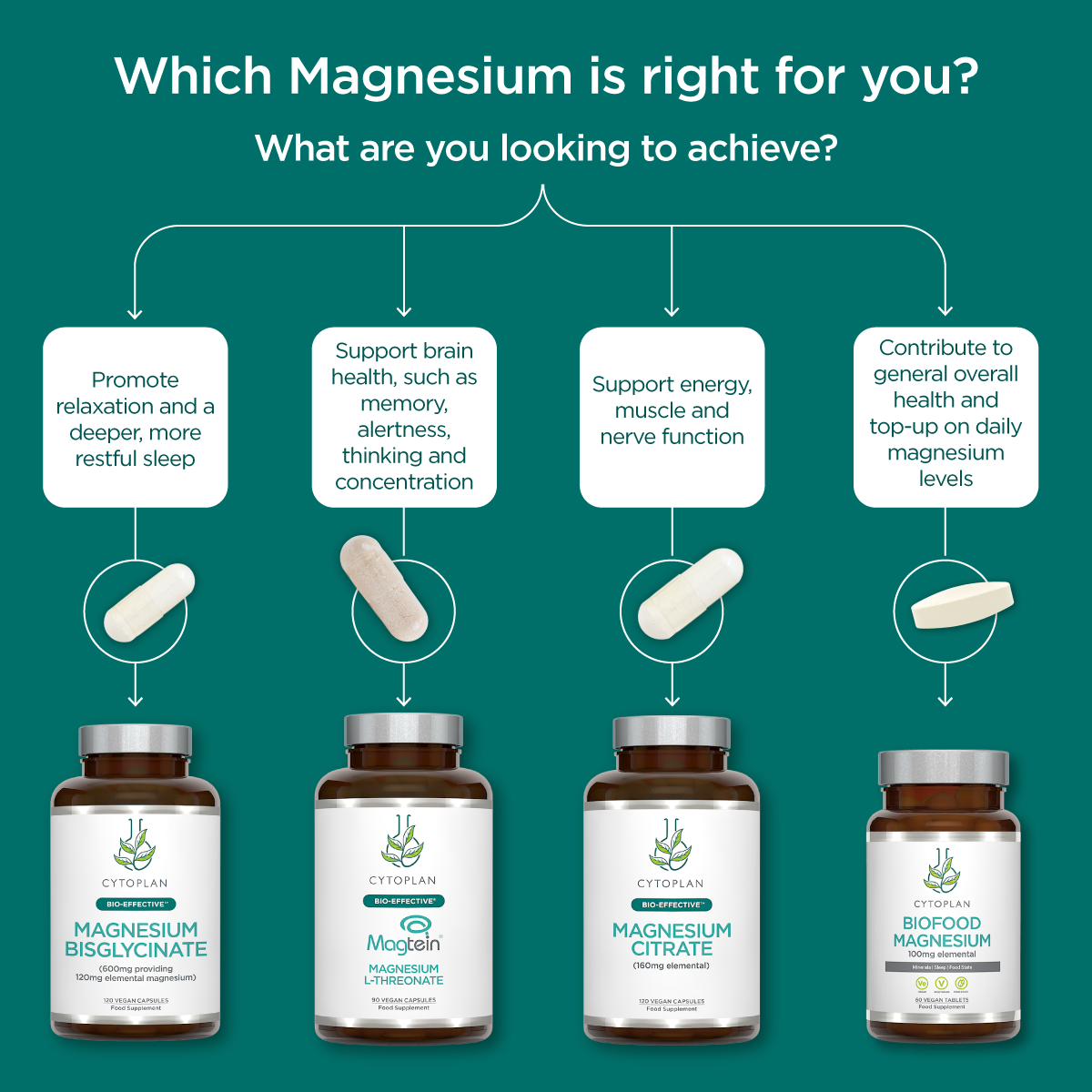
Confused about which magnesium supplement is right for you?
Magnesium Bisglycinate, Citrate, Magtein® or Biofood—they may all be magnesium, but each works differently. Choosing the right one can make all the difference in achieving your health goals.
Read on to discover the different types of magnesium and their benefits.
 Optimum potency for optimum health
 Premium ingredients that work
 Clean products, with no unnecessary extras
 Unique formulations backed by science
Bio-Effective® Supplements
Our Bio-Effective® formulas are optimally absorbed and recognised by your body, so they can be used exactly where they’re needed most.
Formulated by Nutritional Therapists, we use only what’s needed to create clean products, free from unnecessary additives.
We combine nutrients and wholefoods with purpose, working in synergy with the body and harnessing the power of nutrition science and nature - resulting in exceptional products that make a real, lasting difference to health.
As featured in





Practitioner Recommended
For over 35 years, our community of 6,000+ practitioners have used Cytoplan products to support their clients. All formulations can be used in a clinic setting, but are designed to benefit everyone.


 Ethically driven, charity-owned
Every purchase channels money to support health and wellbeing projects across the UK
Ethically driven, charity-owned
Every purchase channels money to support health and wellbeing projects across the UK
 Practitioner recommended
For over 35 years, our community of 6,000+ practitioners have used Cytoplan products to support their clients
Practitioner recommended
For over 35 years, our community of 6,000+ practitioners have used Cytoplan products to support their clients
 Independently tested & UK made
From our manufacturing facility in Worcester, we operate to the highest food quality standards
Bio-Effective® supplements
Our Bio-Effective® formulas are optimally absorbed and recognised by your body
Independently tested & UK made
From our manufacturing facility in Worcester, we operate to the highest food quality standards
Bio-Effective® supplements
Our Bio-Effective® formulas are optimally absorbed and recognised by your body
FAQ’s
Why is Magnesium Important for Your Health?
Magnesium is a crucial mineral that supports over 300 enzyme functions in the body. It is particularly important for enhancing production of energy, keeping you alert, energised and helping all body systems do their work. It is also a vital component of bones, and helps muscles function properly. It supports nervous system function, helping in particular to balance levels of stress and support normal sleep.
Am I getting enough magnesium?
Despite its importance, many people aren’t getting enough magnesium. Poor diet, soil depletion, food processing and cooking techniques have significantly reduced magnesium levels in our diets. Additionally, stress and busy lifestyles further increase our need for this essential mineral, by using more of it up. Often there may not be enough magnesium in a multivitamin, so adding a magnesium product to your other daily supplements can ensure you get enough of this essential nutrient.