

Do I need to support my bone health now I’m in menopause?
Menopause is a natural part of aging and is triggered as a woman’s oestrogen levels start to decline. Several changes will occur as a woman goes through this natural transition – and her nutrient requirements are likely to change, accordingly.
Bone health is one of the areas that might need extra support as a woman looks towards the next chapter in her life. Oestrogen plays a protective role in bone health and can help to prevent deterioration of bone tissue and maintain bone density. Therefore, following menopause there can be an increased risk of bone density conditions such as osteoporosis. The good news is that that diet and lifestyle, and ensuring great levels of the following key nutrients, can help to support your bone health.
Calcium – well-known for its role in supporting healthy bones and teeth. The most important sources of calcium in the diet are dairy products, fish (especially sardines with bones), pulses and a few vegetables and fruits (particularly nuts and seeds). Calcium is a widely supplemented nutrient, but it is important to choose a wholefood form to ensure optimal absorption and reduce the risk of negative side effects.
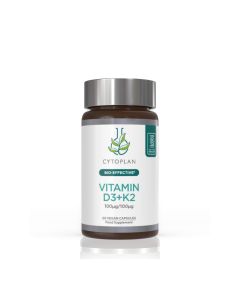
Vitamin D – known as the “sunshine vitamin” as we produce it when the skin is exposed to UV light, plays an important role in maintaining calcium homeostasis and bone mineralisation. Few foods naturally contain adequate amounts of vitamin D, so supplementation, particularly in the autumn and winter months, is important.
Vitamin K2 – this fat-soluble vitamin is a by-product of our gut bacteria, and found in fermented foods. K2 can enhance bone mineralisation and reduce the risk of calcification of the soft tissues and arteries.
Studies have show that calcium, when taken with vitamins D3 and K2 can be more supportive to bone health than each nutrient taken in isolation.
Magnesium - regulates the transport and metabolism of calcium and is central to the structure of bone, with around sixty percent of the body’s magnesium being found in the bone tissue. Magnesium is also an essential cofactor for Vitamin D synthesis and activation. Magnesium is found chiefly in green vegetables, but also sources such as beans, wholegrains, nuts and seeds.
Boron - this trace element plays an important role in numerous biological functions, including calcium metabolism, growth and maintenance of bone tissue.
Collagen - The bones are hard tissues and can be likened to a reinforced concrete building – with collagen representing the reinforcing steel. Collagen provides not only the framework for bones, but also a source of flexibility. Our production of collagen decreases with age, and supplementing with collagen peptides has shown to promote collagen synthesis.
Phytoestrogens – these naturally occurring plant compounds mimic the action of oestrogen and can therefore provide mild oestrogenic action in the body. As mentioned, oestrogen can protect bone health, which may go some way to explaining why populations with a high intake of soy, rich in phytoestrogens, tend to have a lower incidence of osteoporotic fractures.
Lifestyle Considerations
Bone is a dynamic tissue that responds to changes in loads by altering its mass, structure and strength, so regular physical activity is very important.
The Royal Osteoporosis Society advise a combination of weight-bearing exercise alongside impact and muscle strengthening exercise. You are weight bearing when you are standing with the weight of your whole body pulling down on your skeleton. These types of exercises include jumping, jogging and aerobics as high impact exercises as well as brisk walking and step aerobics as lower impact exercises. In addition, muscle strengthening exercises include lifting weights, using elastic exercise bands and exercises including some resistance against gravity.