



In today’s health-conscious world, the role of daily supplements is firmly in the spotlight. According to a YouGov survey from July 2025, over half of adults in the UK regularly take a multivitamin or other dietary supplement. Multivitamins remain a popular choice, often seen as a simple and convenient way to safeguard against nutritional gaps and support long-term wellbeing. But let us take a closer look at the real benefits of taking a multivitamin every day...
What exactly is a multivitamin?
Multivitamins are dietary supplements that usually provide a mixture of essential vitamins and minerals, sometimes alongside other beneficial nutrients. They are not intended to replace a healthy diet, but rather to fill potential nutritional gaps in your diet and prevent deficiencies.
Multivitamins can help to support your overall health and wellbeing, and each vitamin and mineral will play an essential role in supporting one or more bodily functions. Key nutrients to look out for in your multivitamin include:
- Vitamin A: Important for vision, growth, reproduction, and immunity
- Vitamin C: Antioxidant nutrient involved in protein metabolism, skin health, and healthy immune function
- Vitamin D3: Promotes bone health and immunity
- Folate: Essential in the formation of red blood cells, as well as cell growth and function
- B Vitamins: Supports our energy levels, brain function and psychological wellbeing
- Chromium: Supports balanced blood glucose levels and insulin sensitivity
- Iron: Especially important for children and women of menstrual age, it supports the formation of red blood cells and energy metabolism
- Iodine: Important for supporting thyroid health
- Magnesium: Key for muscle/nerve function, bone health and supporting positive mental health
- Selenium: Antioxidant nutrient essential for immune and thyroid function, and male reproductive health
- Zinc: Supports the immune system, skin health, digestive health and DNA synthesis.
Should everyone take a multivitamin?
There is evidence of a “nutrition gap” in many people’s diet – particularly the typical Western diet, and while we always advocate that a healthy diet is key, a multivitamin offers a practical and effective way to bridge this gap. You can read more about the nutrition gap in our recent ask the expert.
According to the most recent government statistics, only 17% of adults in the UK meet the 5-a-day recommendations for fruit and vegetables – and the evidence for children is even more sobering, with only 9% of 11–18-year-olds meeting the daily advised intake. Through these figures we can see that most of the population will be missing out on several essential vitamins and minerals, and our health is likely to be suffering as a result. It is especially worrying in children, who need vitamins and minerals to support growth and development, as well as lay the foundations for their future health.
Population groups that are especially advised to ensure good nutrient intake via a multivitamin include:
Children
Children between the ages of 6 months and 5 years are encouraged by the NHS to take a multivitamin containing vitamins A, C, and D to ensure that they are developing properly. A multivitamin might also help to give a nutritional boost to picky eaters, or children with allergies and intolerances.
People with restricted diets
For example those following a vegetarian or vegan diet may be more susceptible to deficiencies in nutrients such as vitamin B12, iron, zinc, iodine and omega-3 fatty acids.
Older adults
Older adults can be more susceptible to deficiencies in nutrients such as vitamins B6, B12 and D, iron, magnesium and zinc. This may be due to dietary choices, reduced digestive function (and therefore absorption) and certain medications – amongst other factors.
Pregnant women
Pregnant women or anyone planning a pregnancy should always ensure they take a targeted pregnancy multivitamin that provides optimal levels of key nutrients such as folate, iron, D3 and iodine. We also recommend you couple your multivitamin with an omega-3 fatty acids supplement.
OK – I think a multivitamin might be for me.... so how do I choose the right one?
There are so many multivitamins on the market, it can be daunting to know where to start. It’s important that you choose a multivitamin that is going to suit your individual needs, and there are a few considerations to keep in mind.
Form
Multivitamins come in a range of different forms – usually capsules, tablets, gummies, liquids or powders. These all have their own benefits and possible drawbacks – for example powders tend to have fewer excipients, but can be less convenient, whereas capsules are easy to take but might not be suitable if you have any issues swallowing. Always find the form that will suit your lifestyle the most.
Levels
Something I regularly get asked is: “why are the levels of nutrients in our multivitamins typically much higher than the NRVs?”. The Nutrient Reference Values (NRVs) were intended merely as a “safety net” to prevent deficiency in most of the population, as opposed to promoting optimal health or taking individual needs into account. There is a big difference between “adequate” and “optimal” levels when it comes to nutrients. A well formulated multivitamin will have levels of nutrients higher than the NRV but below the upper safe limit.
Nutrient forms
It is important to look for nutrients in their most bio-effective form. By “bio-effective” we mean nutrient forms that are optimally absorbed and recognised by your body, so they can be used exactly where they’re needed most. This may be wholefood nutrients, extracted directly from food in their natural form, or pre-metabolised nutrients for gentle and effective utilisation.
Excipients
Most supplements will contain some level of excipients, which are non-active ingredients that facilitate the making of ingredients into a finished supplement. Many people nowadays will try to avoid excipients altogether, but a well-formulated supplement may use small levels of essential, safe excipients to ensure the quality of the finished product. Problems can arise if a supplement contains a long list of harmful or unnecessary excipients – always check the labels and ask the company if you aren’t sure.
I’ve chosen my multivitamin – what is the best way to take it?
We usually recommend you take your multivitamin with a meal, or shortly after eating. This approach can enhance the absorption of fat-soluble vitamins like A, D, E, and K, as they are better absorbed in the presence of dietary fats. It can also minimise the risk of any potential digestive side effects.
With breakfast is ideal, or possibly with lunch, but some people can find the energising effects of the B Vitamins can affect their sleep if taken too late in the afternoon, plus the nutrients in a multivitamin can help to support the biological functions that take place throughout the day (rather than overnight).
If you plan to take 2 doses of your multivitamin daily, the gold standard is to take them at two different times (1 at breakfast and 1 at lunch, for example). Again, this could reduce the risk of any digestive side effects and allow for optimal absorption.
Will I feel a difference if I take a multivitamin every day?
Everyone is different here. For example, if you already maintain a healthy diet and lifestyle, the impact is likely to be subtle – but that doesn't mean that the multivitamin won’t be proactively supporting your current and future health. You may not feel an immediate burst of energy or mood lift. Instead, the benefits may be longer-term: reduced risk of nutrient deficiencies, support for healthy ageing, and overall wellbeing.
That being said, if you do have nutrient deficiencies you may start to feel the difference if you take a multivitamin regularly. For example:
-
B vitamins and iron - you might start to feel a reduction in fatigue
-
B vitamins, vitamin D and magnesium – you might start to see improvements in mood
-
Vitamins C, D, selenium and zinc – you might notice stronger immunity
I’m taking prescribed medications, can I still take a multivitamin?
In most cases, yes – but we always recommend checking in with our team of nutritional therapists if you aren’t sure.
I’ve noticed my urine is neon yellow when I’ve taken my multivitamin – should I be worried?
No need to panic! The bright yellow colour is the pigment in Riboflavin (vitamin B2) as your body excretes any excess. It is completely normal and harmless – nothing to worry about!
If you’re considering adding a multivitamin to your daily regimen, please do reach out to our team of qualified nutritional therapists who can evaluate your specific needs, and provide guidance on the best multivitamin for you.
-
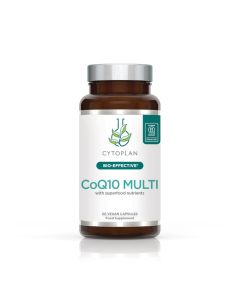
 In stockCoQ10 Multi
A high-strength multivitamin and mineral enhanced with a phytonutrient-rich s...
£32.99 from -

 In stock
 -

 In stockAdrenal Support
Targeted complex to support the adrenal glands and help reduce adrenal fatigu...
£19.99 from