



Why is DHA important?
Docosahexaenoic acid or DHA is an omega-3 fatty acid found in every cell of your body and provides a vital structural component of your skin, eyes and brain. While DHA can be synthesised from the plant based omega-3 fatty acid alpha-linolenic acid (ALA), this process is often inefficient and requires adequate levels of vitamins and minerals. Only around 0.1-0.5% of ALA is converted into DHA in your body and therefore it is important to get DHA either through diet, from oily fish such as salmon, mackerel and trout or through a supplement – where algal oil offers a rich source of this fatty acid.
DHA is linked to several different health benefits:
Brain Health
The brain has a unique fatty acid composition. DHA makes up around 97% of the omega-3s found in the brain and is critical for optimal brain health and function at all stages of life.
DHA is essential for brain and eye development in babies, and these organs grow rapidly in the mother’s last trimester of pregnancy as well as the first few years of life. Babies will receive DHA in utero during pregnancy and then through the mother’s breastmilk after birth, with the greatest accumulation in the brain occurring during the first few months of life. Low levels of DHA have been linked to poorer visual development and cognitive function, and as such, it is essential that the pregnant and nursing mother has a healthy intake of DHA to support this vital development. There is a risk of heavy metal toxicity from frequently consuming oily fish in pregnancy, and an algal oil supplement rich in DHA could provide a safe, effective source.
DHA is also supportive to healthy brain ageing. Levels of DHA in the brain decline as we age, but when dietary or supplement levels increase, additional stores of DHA can be deposited into the brain, where it helps to facilitate tissue health and integrity which in turn can have a beneficial effect on learning and memory. Studies have also demonstrated that people with Alzheimer’s disease have lower levels of brain DHA than older people with healthy brain function, and that those with higher blood levels of DHA may have a reduced risk of developing dementia.
Vision and Eye Health
As mentioned, DHA plays a significant role in the development of proper visual function in infants, and this fatty acid makes up around 93% of the omega-3s found in the retina of the eye, where they enhance vision, the fluidity of photoreceptor membranes and can protect the integrity of the retina.
Anti-Inflammatory
Through its role in balancing the ratio between pro-inflammatory omega-6 fatty acids, abundant in our modern western diet, DHA can help to reduce inflammation, which is often at the heart of many common chronic diseases such as cardiovascular disease and autoimmunity. For example, in rheumatoid arthritis (RA), an inflammatory autoimmune condition, supplementing with DHA has been shown to reduce inflammation and ease symptoms. Low DHA levels have also been associated with an increased risk of developing RA. DHA has also been shown to have protective effects against many other chronic diseases related to immune dysfunction and inflammation. DHA works in synergy with the omega-3 fatty acid eicosapentaenoic acid (EPA), also provided naturally in good levels in Vegan Omega 3 to provide an anti-inflammatory effect.
-
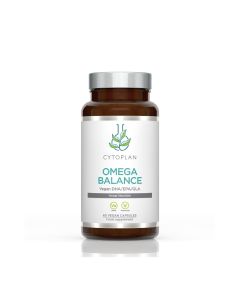
 In stockOmega Balance
Omega Balance is an omega 3 and 6 supplement for women, combining omega 3 wit...
£33.99 from