
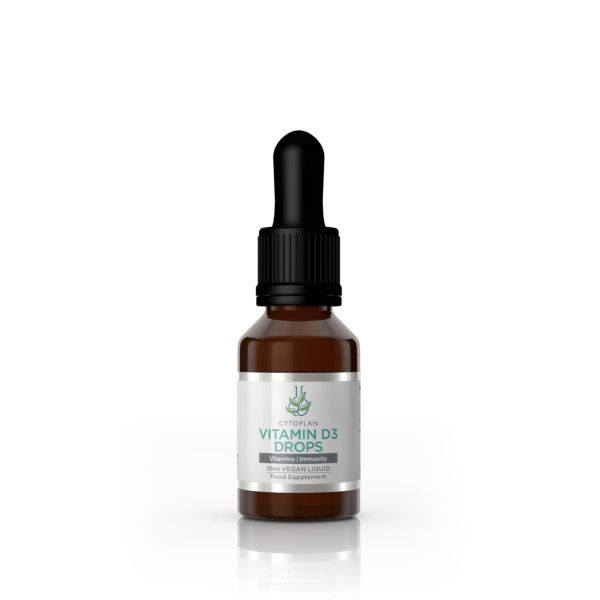
Vitamin D3 Drops
Gentle potency vitamin D3 liquid, offering flexible dosing to support strong bones and a healthy immune system. Suitable for babies from birth and young children.
- Gentle potency liquid vitamin D3
- Suitable from birth
- Supports bones & healthy immune system
 Order before 2pm Mon-Fri for next day delivery
Gentle potency for flexible dosing for the whole family
Each drop provides 100iu, and is suitable for babies from birth and young children. 4 drops provides the 10µg (400iu) recommended dose for ages 1+.
Simple, hyopallergenic formula
These simple liquid drops are tasteless and odourless, and easily absorbed and utilised by the body.
Supports bone health and immunity
Promotes normal immune and nervous function, cellular health, and normal structure of teeth and bones.
Bio-Effective® vegan form
Vitamin D3 (cholecalciferol) is the most effective form of vitamin D at raising blood levels. Normally D3 is a by-product of sheep's wool, but this product contains vegan sourced D3 from marine algae.
A gentle potency vitamin D3 liquid, providing 100iu per drop, offering flexible dosing, and suitable for the whole family including babies from birth and young children. 4 drops provides the 10µg (400iu) recommended dose for ages 1+.
These simple liquid drops are tasteless and odourless, and easily absorbed and utilised by the body.
Vitamin D is a vital nutrient for supporting normal immune function, nervous system function, cellular health and division, and normal structure of teeth and bones, helping to promote calcium levels.
Vitamin D3 (cholecalciferol) is the preferred form of vitamin D and has been shown to be more effective at raising blood levels of vitamin D (25(OH)D or calcidiol) than vitamin D2.
Many people are at risk of vitamin D deficiency, particularly those with darker skin, limited sun exposure due to spending more time indoors, covering up with clothing, using sunscreen, or living in northern climates. People with certain health conditions (coeliac disease, obesity) may also struggle to maintain adequate levels. Vegans, vegetarians or those on low-vitamin D diets are vulnerable, as are those taking medications that may affect absorption. Babies and young children, pregnant and breastfeeding women also have increased needs. Supplementation is recommended, especially in winter months or for those in high-risk groups.
As directed by a practitioner: 2 drops = 5µg (200 i.u.), 0.5 mls = 40µg (1600 i.u.).
| Active Nutrient | Strength | %NRV* |
| 2 drops of vitamin d3 | 5µg (200 i.u.) | 100 |
| 0.5mls of vitamin d3 | 40µg (1600 i.u.) | 800 |
|
+NRV = Nutritional Reference Value * Indicates no NRV |
||
Vitamin D3 (plant derived cholecalciferol), medium chain triglycerides of coconut fatty acids, d-alpha-tocopherol (antioxidant).
Vegetarians and vegans.
None.
Medium chain triglycerides of coconut fatty acids, d-alpha-tocopherol (antioxidant).
GMO, wheat, soy, dairy, added sugar, colourings & flavourings.
Store in a cool, dry place.
Inspired by nature, backed by science, loved by you
Excellent

Looking for FREE tailored advice?
Our on-site team of Nutritional Therapists is here to answer your health questions.
Bio-Effective® Supplements
Our Bio-Effective® formulas are optimally absorbed and recognised by your body, so they can be used exactly where they’re needed most.
Formulated by Nutritional Therapists, we use only what’s needed to create clean products, free from unnecessary additives.
We combine nutrients and wholefoods with purpose, working in synergy with the body and harnessing the power of nutrition science and nature - resulting in exceptional products that make a real, lasting difference to health.
 Optimum potency for optimum health
 Premium ingredients that work
 Clean products, with no unnecessary extras
 Unique formulations backed by science
Practitioner Recommended
For over 35 years, our community of 6,000+ practitioners have used Cytoplan products to support their clients. All formulations can be used in a clinic setting, but are designed to benefit everyone.


As featured in





 Ethically driven, charity-owned
Every purchase channels money to support health and wellbeing projects across the UK
Ethically driven, charity-owned
Every purchase channels money to support health and wellbeing projects across the UK
 Practitioner recommended
For over 35 years, our community of 6,000+ practitioners have used Cytoplan products to support their clients
Practitioner recommended
For over 35 years, our community of 6,000+ practitioners have used Cytoplan products to support their clients
 Independently tested & UK made
From our manufacturing facility in Worcester, we operate to the highest food quality standards
Bio-Effective® supplements
Our Bio-Effective® formulas are optimally absorbed and recognised by your body
Independently tested & UK made
From our manufacturing facility in Worcester, we operate to the highest food quality standards
Bio-Effective® supplements
Our Bio-Effective® formulas are optimally absorbed and recognised by your body
FAQ’s
Why do I need vitamin D?
Vitamin D is a vital nutrient for supporting normal immune and nervous system function, cellular health and division, muscle function and calcium absorption for healthy bone and teeth.
Which is best - Vitamin D2 or D3?
Vitamin D3 (cholecalciferol) is the preferred form of vitamin D and has been shown to be more effective at raising blood levels of vitamin D (25(OH)D or calcidiol) than vitamin D2 (ergocalciferol).
Can you get a vegan source of vitamin D3?
Vitamin D3 (cholecalciferol) is more effective at raising blood levels than the normally plant sourced vitamin D2 or ergocalciferol. Usually vitamin D3 in supplements is a by-product of sheep's wool, but it is possible to obtain vegan sourced vitamin D3 which is naturally produced by marine algae.
Who is at risk of a vitamin D deficiency?
Many people are at risk of vitamin D deficiency, particularly those with darker skin, limited sun exposure due to spending more time indoors, covering up with clothing using sunscreen, or living in northern climates. People with certain health conditions (coeliac disease, obesity) may also struggle to maintain adequate levels. Vegans, vegetarians or those on low-vitamin D diets are vulnerable, as are those taking medications that may affect absorption. Babies and young children, pregnant and breastfeeding women also have increased needs. Supplementation is recommended, especially in winter months or for those in high-risk groups.
Should I give vitamin D to my baby or young child?
In the UK, the Department of Health recommends babies from birth to 1 year of age who are being exclusively breastfed should be given a daily supplement containing 8.5 to 10µg of vitamin D, whether or not the mother is taking a supplement containing vitamin D. They recommend that adults and children over the age of 1 should supplement with 10µg of vitamin D a day. (10µg is 4 drops of the D3 Drops). if your child is being formula fed (more than 500ml) you should consult with your healthcare provider before supplementing vitamin D.