

I'm suffering with vaginal dryness - is there anything I can do to help my symptoms?
Vaginal dryness is a condition where the tissues of the vagina become insufficiently lubricated leading to discomfort, irritation, or pain. It can also cause itching, burning, or a feeling of tightness in the vaginal area.
Vaginal dryness occurs in women of all ages, but it becomes much more common after menopause. It is thought that around 17% of adult women under 50 experience symptoms of vaginal dryness at some point, but this number increases to over 50% after menopause.
How do hormones affect vaginal health?
Perimenopause is the transitional phase leading up to menopause (when there has been an absence of periods for 12 months), marking the time when a woman's body undergoes significant hormonal changes as she moves toward the end of her reproductive years. During perimenopause, hormone levels can fluctuate greatly, leading a range of physical and emotional symptoms.Lubrication and Moisture:
Oestrogen plays a key role in helping to maintain moisture levels in the vagina, by promoting the production of natural lubrication. Through menopause transition, decreased oestrogen levels can lead to vaginal dryness, discomfort during sex, and an increased risk of irritation.
Vaginal Elasticity and Thickness:
Ostrogen plays a crucial role in maintaining healthy vaginal tissues, including collagen levels, which contribute to the elasticity, thickness, and moisture of the vaginal tissue. A decrease in oestrogen, such as during menopause transition, can lead to thinning of the vaginal walls (vaginal atrophy), which can make the vagina feel drier, less elastic, and more susceptible to irritation or infection.
pH Balance:
During the reproductive years, the vagina is rich in glycogen, which is converted by the normal flora, lactobacilli, into lactic acid. Therefore, oestrogen helps to maintain an acidic environment, which helps to prevent vaginal and urinary tract infections (UTIs). After menopause, the levels of lactobacilli in the vagina decrease, leading to an increase in vaginal pH, making the vagina more prone to infections, such as bacterial vaginosis (BV) or yeast infections, which can cause dryness and irritation.
What else can cause vaginal dryness
Although it is most common around menopause, a woman can also experience vaginal dryness at other stages in her life. For example, when there are changes to hormone levels in pregnancy and lactation.
Certain medications can also contribute to vaginal dryness, such as antihistamines, which have a drying effect on the body’s mucous membranes, including the vaginal lining.
Not drinking enough water can lead to general dehydration, which may also affect moisture levels in the vagina. Proper hydration supports overall bodily function, including maintaining healthy mucous membranes.
Personal hygiene products such as perfumed soaps, body washes or feminine hygiene sprays can strip your vagina of its natural moisture, alter its pH balance and make it more prone to dryness and infections.
How can a woman protect against vaginal atrophy and vaginal dryness?
There are a number of natural nutrients that can help to protect against, or support the symptoms of vaginal dryness:
Phytoestrogens are plant compounds with oestrogen-like properties. They can elicit a mild oestrogenic effect in the body, so can support any number of symptoms caused by the drop in oestrogen at menopause. Two major groups of phytoestrogens are isoflavones and lignans; soybeans are a rich source of isoflavones, and lignans are found in flaxseed, whole grains, legumes, fruits, and vegetables. Studies have demonstrated that supplementing with phytoestrogens may improve symptoms of vaginal atrophy.
Sea Buckthorn Oil provides an incredibly rich source of nutritionally and medicinally important components, including a unique mix of both saturated and unsaturated fatty acids, vitamins, minerals, carotenoids, flavonoids, phospholipids, anthocyanins and amino acids. Most notable is the presence of the fatty acid omega-7, which is a primary component of the cells that make up mucous membranes. Several studies emphasize the beneficial effects of omega-7 for those suffering with vaginal inflammatory atrophy, where it has demonstrated marked improvements in the dryness and integrity of the vaginal epithelium, so can be considered a good alternative where conventional oestrogen hormone treatment may be inappropriate.
Probiotics are live microorganisms that, when consumed in sufficient amounts, can positively affect your health, and have emerged as a promising solution to restore and maintain the balance of the vaginal microbiota. Oral probiotics can colonise in the gut and vagina, promoting the reproduction of lactobacilli, therefore offering a particularly helpful natural strategy to support vaginal health at menopause.
-
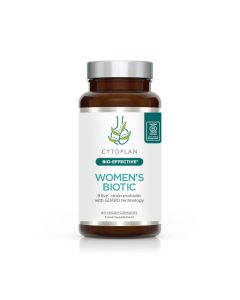
 In stockWomen's Biotic
A clinically researched women’s probiotic with 9 key strains of live, frien...
£37.99 from -
 Out of stockCytosterone (Fenugreek extract)
Targeted and effective support for healthy testosterone levels. Formulated wi...
Out of stock