


Do I need to take vitamin D3 with K2?
‘Sunshine’ Vitamin D might be the number 1 newsworthy nutrient, even more as we approach winter, and the daylight hours dwindle. And we are often told we should supplement it with vitamin K for maximum effect. But what’s the real story about these 2 nutrients if we sweep away the media noise out there? Should you supplement vitamin D, why, when, and how much? Must you always supplement vitamin D with vitamin K? And if you need D & K, what are the best supplements to consider?
Vitamin D benefits
It’s no exaggeration to say vitamin D is one of the most important nutrients in the body, responsible for multiple health effects. It’s actually classed as a ‘pro-hormone’ and is converted to a hormone called calcitriol that enables a wide range of vital activities. Best known for helping us absorb calcium to strengthen the structure of bones and teeth, it also ensures healthy cell division, robust immune function (while also reducing excess inflammation), making key neurotransmitters, such as serotonin for mood, regulating blood glucose, and ensuring healthy muscle function. When one nutrient supports so much ‘head-to-toe’ activity, we need to ensure we have a steady supply. Also, we need to be sure we are converting it to its active form, transporting it, and making sure it activates vitamin D receptors that respond to its signal within our cells. Any issues with these steps will reduce its effectiveness.
Where do we get vitamin D from?
We have a neat trick provided by nature to make our own vitamin D in skin from exposure to sunlight, where UVB rays trigger conversion of a form of cholesterol to cholecalciferol (the animal form, also called ‘vitamin D3’). As plants and other animals also make their own vitamin D, we can also obtain it in the diet, with plants providing ergocalciferol (‘vitamin D2’) and animal foods, D3. The main dietary sources are oily fish, eggs, milk products, and to a lesser extent, mushrooms, and nuts. Both forms of vitamin D are converted in the liver to 25-hydroxyvitamin D (calcidiol), then in the kidneys to the active hormone 1, 25-hydroxyvitamin D (calcitriol). The balance of evidence suggests the vitamin D3 form is more bioavailable and effective, and as we can now even obtain D3 from lichen and algae, vegans don’t need to miss out. So, look for vegan vitamin D3 forms in your supplements for that reassurance it’s working optimally.
Am I deficient in vitamin D?
In the northern hemisphere, with lack of sunlight, and difficulty obtaining enough vitamin D from those quite narrow dietary sources, it’s not surprising deficiency is relatively common. In the latest UK National Diet and Nutrition survey, 18% of adults had vitamin D blood levels of less than 25 nmol/L. Worldwide studies estimate up to 40% fall below this level in winter. And that’s a very low bar as optimum vitamin D levels go, since experts consider they should ideally be at least 75, if not around 100 nmol/L or more for health and disease prevention. Even in sunnier climates, insufficiency can be prevalent as people use sunscreens, cover up, or change their outdoor routine. People at risk also include those with darker skin, dieting or disordered eating patterns, liver or kidney disease, babies and the elderly, vegetarians, vegans and ‘flexitarians’, people who are pregnant, overweight, with compromised fat digestion, or using weight loss medications. Vitamin D conversion to active forms may be limited by a lack of the supporting nutrients such as magnesium. Some of us even carry slight genetic variations making us less efficient converters or with less sensitive receptors. All of these people may need more vitamin D to overcome additional challenges.
Do I need to supplement vitamin D?
Of course, the answer is going to be ‘it depends’ as we are all different. Testing your levels, via your GP or a blood test bought online, can help. Just a few provisos: consider the time of year as your levels may well not be the same between summer and winter, and take the NHS recommended values as an absolute baseline only. We are really looking for a level of 75-100nmol/L at least for optimum, especially if there are additional risk factors. If you know your levels, you can use this simple online calculator to find the dosage of vitamin D to reach your optimum. If that’s too complicated, here are a few simple rules of thumb!
-
We should all probably aim to get at least 1000-2000 i.u. (international units) per day (which equates to 25-50µg or micrograms).
-
In winter, if we are insufficient, have other risk factors or specific higher needs (bone or immune support), we should consider increasing to around 4000-5000iu a day in total (In this situation, it might be helpful to test).
-
If you know for sure you have a deficiency, you may need to increase this further for a few months to get your levels up. 5-10,000 i.u. a day (or use the calculator).
-
Once levels are optimal, aim to revert to a daily maintenance level (1000-2000 i.u.), monitoring in case we still need a higher daily level to stay optimal.
What is Vitamin K2?
A crucial nutrient found in green vegetables, vitamin K is important for binding calcium in the process of blood clotting, making sure your blood is not too thin. In fact, it is given as an injection to newborns to prevent ‘Vitamin K Deficiency Bleeding’, an otherwise dangerous condition. It also activates osteocalcin, a protein that plays a part in bone mineralisation, ensuring calcium is used to form bones. In doing so, it helps with calcium balance in the body, ensuring it is less likely to stick around in blood vessels or other organs like the kidneys, so preventing calcification of blood vessels (in cardiovascular disease) and kidney stones. These effects also mean that it seems protective against Alzheimer’s, some cancers, varicose veins and skin ageing. We get vitamin K1 from green vegetables, and it’s converted to the more active form of K2 by gut bacteria, but it’s the K2 (as menaquinone-7, or MK-7) that really provides the calcium effects, so this is the form to look for in supplements.
Should I supplement vitamin K2 with D3?
It’s a common misconception that you MUST take the two together for vitamin D to be absorbed and work properly. Vitamin D absorption and its primary functions do not depend on vitamin K2. And using vitamin D only is not necessarily a problem, as most vitamin D research is on using that nutrient alone. However, it’s also true that there is a risk of hypercalcaemia (too much blood calcium, leading to complications) with high dose vitamin D supplementation that is not needed, especially if there is too little or too much dietary calcium (even too little will cause the high levels of vitamin D to take calcium from bones for the blood!). So, for most people, it is still highly recommended to take vitamin K2 with D3 to ensure calcium is used properly.
Because of how they work together, taking both becomes a certainty if you want to support bone health and if cardiovascular disease is a concern. A good ratio to aim for is 50µg of K2 per 50µg of D3. On the other hand, Vitamin D on its own may be needed if you need even higher levels to correct a deficiency, as you don’t really need more than 100-150µg of K2 in total. So, you may wish to use a vitamin D only product to top up your D levels. Vitamin K1 in particular helps coagulate the blood, although evidence suggests K2’s primary action is on calcium metabolism and not increasing coagulation. However, it is still technically not recommended to take ‘vitamin K’ supplements alongside anti-coagulant medications like warfarin. But the bottom line for most people is, do ensure you have some K2 in your supplement regime to go with your vitamin D.
The Low Down - what supplements should I take?
-
Take vitamin K2 as MK-7 and vegan vitamin D3 together to ensure calcium is used properly.
-
For everyday use, take a Daily D3 & K2 product providing up to 50µg of each or consider a multivitamin like CoQ10 Multi.
-
In winter, or for extra protection, consider the higher strength Vitamin D3 & K2 or a Multi topped up with Daily D3 & K2.
-
If your D3 needs are higher, or you are avoiding vitamin K, top up with or use Wholefood Vitamin D3 as needed.
-
For babies and children, you can use 4 drops of the Vitamin D3 Drops, from birth, providing the UK Department of Health recommended levels.
Vitamin D3 is rightly lauded as one of the go-to nutrients we can’t ignore, with multiple health benefits. And it’s likely most of need to make sure we are maintaining good levels. Combining D3 with K2 is a perfect partnership to ensure its full effects. If you need any further support to find what’s right for you, do contact our friendly and knowledgeable nutrition team and we’ll be glad to help.
-
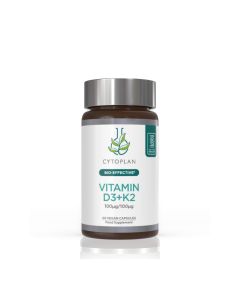
 In stockVitamin D3 + K2
A unique, high potency vitamin D3 + K2 formula for immune and bone support.
£23.99 RRP £17.99 Special Price -
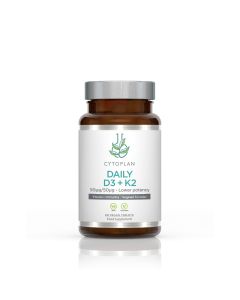 In stockDaily D3 + K2
Vitamin D3 and K2 tablets for everyday support for immunity and bone health.<...>
£22.99 RRP £18.39 Special Price -
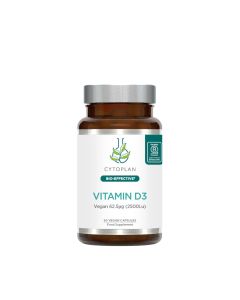
 In stockVitamin D3
High-potency vegan vitamin D3, providing 2,500iu per capsule for daily immune...
£10.99 RRP £8.24 Special Price 25% off