



The Mediterranean diet: a naturally occurring model of multi-supplementation - Part 1
Our blog this week comes in two parts, with the second to follow next week, written by Miguel Toribio-Mateas. Miguel is an experienced nutrition practitioner and researcher with a specialisation in ageing and particularly brain ageing, having completed a MSc in Clinical Neuroscience at Roehampton University along with extensive professional development in this subject, including a fellowship in metabolic and nutritional medicine with the Metabolic Medicine Institute (US) and a US Board Certification in Clinical Science of Anti-Ageing.
Miguel has recently been awarded a Santander Bank Scholarship for multidisciplinary doctoral research at the Institute for Work-Based Learning of Middlesex University. His Professional Doctorate research project is on translational medicine in brain ageing and cognitive decline, using the Bredesen Protocol as a model for neuroprotection.
You may also know Miguel from his voluntary role as Chairman of the British Association for Applied Nutrition and Nutritional Therapy. He is also a regular contributor to professional publications and is quoted in national/international press frequently on health and nutrition matters. Last but not least, Miguel is a born and bred Mediterranean man (although adopted British) so we trust his “insider view” on the beneficial effects of the Mediterranean diet.
The Mediterranean diet is a “trending topic”. Everyone is talking about it and everyone seems to claim that the diets they’re recommending are based upon, or modelled upon, a Mediterranean-type diet. Obviously, some of these claims are more credible than others, and as a Mediterranean man myself, I can’t help but smile at some of them. There are as many variations of this so-called Mediterranean diet as there are of a vegan or a vegetarian diet. Every country around the Mediterranean Sea will have its own “version” of it, which is likely to include a lot of foods that are seen in typical Mediterranean diet “pyramids” or charts, and a lot that are totally ignored by scientists who specialise in this specific topic.
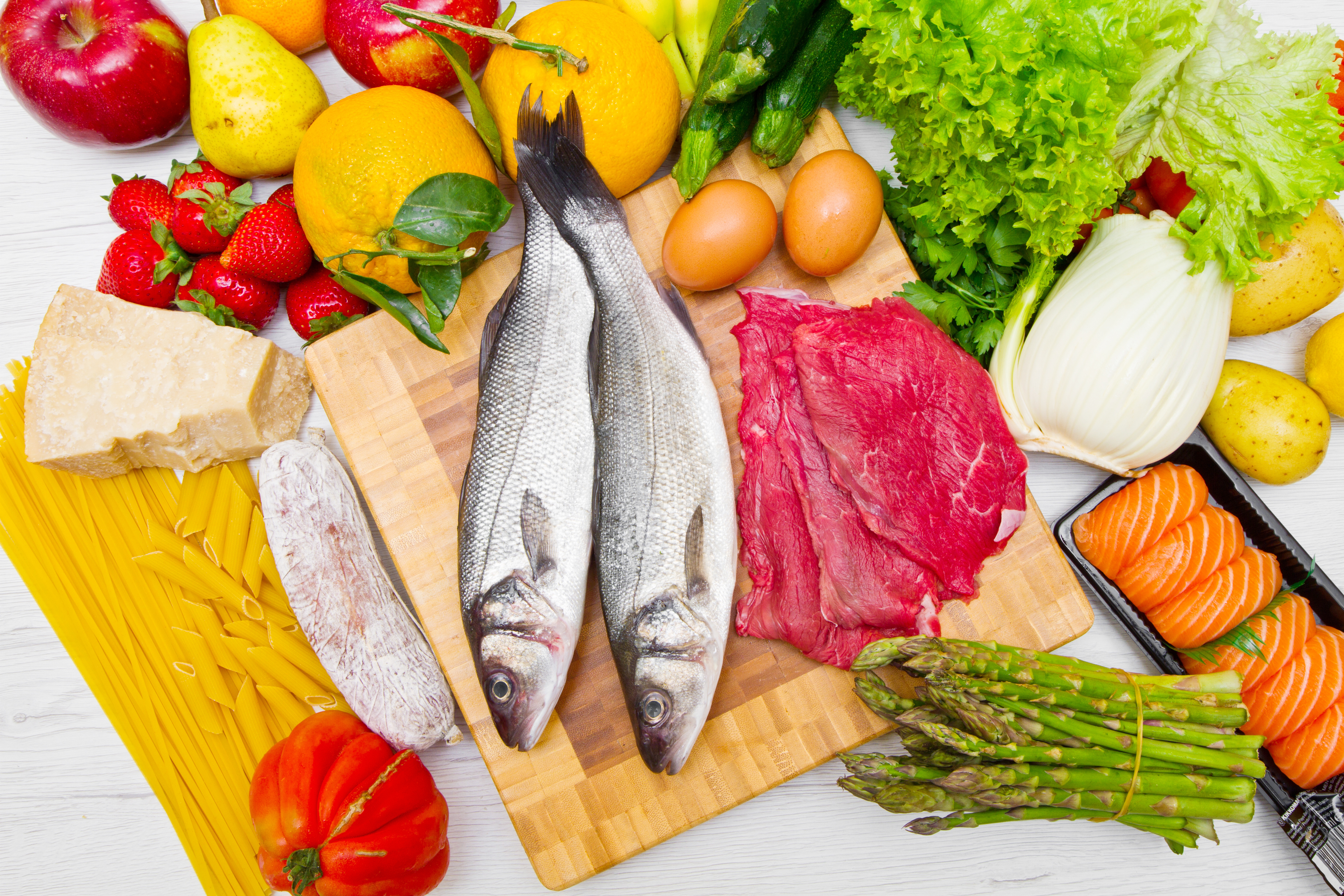 The images of foods that the romanticised idea of the Mediterranean diet tend to conjure up include oily fish, lots of green vegetables, fruit and olive oil. One cannot help but think of the typical picture of red tomatoes and a few basil leaves alongside some fresh pasta. But is this the true Mediterranean diet, and does everyone around the Mediterranean eat like that? The reality is that any model that aims to deal with a large amount of complexity, like variations between regions inside each of the Mediterranean countries, is likely to need to be oversimplified to make any sense at all. Thus the Mediterranean diet “model” ignores the fact that cured and organ meats are eaten daily in some regions of Spain and Italy, as is full fat dairy, but the whole variety issue is perhaps a subject best left for another blog. Today I’d like to focus on what I believe to be the key nutrients in the Mediterranean diet that act as neuroprotective agents, i.e. natural substances present in food consumed around the Mediterranean that are known to enhance cognitive function and to delay brain ageing.
What current literature is saying about nutrition and brain ageing
I’m using a recent systematic review and meta-analysis by Lopes da Silva et al (2014) because 1) it’s an open access article (I’m a great believer in democratising access to science for everyone, and not just an elite) and 2) because it provides a comprehensive correlation between the adequacy of various nutrients and brain function in Alzheimer’s disease (AD henceforth) patients. Fortunately, not everyone gets Alzheimer’s, but because there is a lot of research on this condition, and particularly on the nutrient deficiencies that are characteristic of its progressive development, I find a review of this type really useful to use as a “guideline” for nutrients that contribute to healthy brain function. These include the vitamins A, C, D and E, as well as the methyl donors B12 (cobalamin), B6 (pyridoxine) and folate, plus B1 (thiamin), the minerals manganese, calcium, copper, iron, magnesium, selenium and zinc, and the essential fatty acids DHA (Docosahexaenoic acid) and EPA (eicosapentaenoic acid). Lower levels of all these nutrients are found in the blood of individuals suffering from AD and are indicative of their impaired systemic availability, which puts these individuals at further risk of neurodegeneration.
So why do I see the above systematic review relevant, you may be asking
Well, aside from the robustness of the methodology employed by the review, the multi-supplementation model investigated as part of the meta-analysis features all of the nutrients that are naturally occurring in the Mediterranean diet. Despite the fact that this dietary model can’t cope with the amount of the intraregional variations around the Mediterranean (they would make any statistics package explode!) the Mediterranean diet can be described broadly as the dietary practices of inhabitants in regions around the Mediterranean Sea, e.g., Italy, Spain, Greece, Croatia, Turkey, Morocco, etc. Just reading the names will give you an idea of the variety of this overarching dietary umbrella that is characterised by the presence of high levels of fresh vegetables, fruits, nuts, seeds and whole grains, as well as fresh fish (including oily fish like sardines, anchovies, mackerel, etc.), seafood and reduced amounts of meat compared to other Western diet types.
Other typical features of the Mediterranean diet include the regular consumption of pulses (e.g. lentils, chickpeas, beans), fresh dairy produce and moderate red wine consumption. The Mediterranean diet is naturally rich in vitamins with antioxidant properties such as vitamins A, K, C, E and D, as well as in methyl donors such as folate and vitamins B6 and B12. Additionally, the Mediterranean diet is also one of the richest dietary patterns in polyunsaturated omega-3 (ω-3) fatty acids (PUFAs) and polyphenolic compounds. Of particular relevance are the myriad of antioxidant compounds in olive oil, which are well documented to possess anti-inflammatory effects and to aid with the clinical management of a variety of conditions.
The images of foods that the romanticised idea of the Mediterranean diet tend to conjure up include oily fish, lots of green vegetables, fruit and olive oil. One cannot help but think of the typical picture of red tomatoes and a few basil leaves alongside some fresh pasta. But is this the true Mediterranean diet, and does everyone around the Mediterranean eat like that? The reality is that any model that aims to deal with a large amount of complexity, like variations between regions inside each of the Mediterranean countries, is likely to need to be oversimplified to make any sense at all. Thus the Mediterranean diet “model” ignores the fact that cured and organ meats are eaten daily in some regions of Spain and Italy, as is full fat dairy, but the whole variety issue is perhaps a subject best left for another blog. Today I’d like to focus on what I believe to be the key nutrients in the Mediterranean diet that act as neuroprotective agents, i.e. natural substances present in food consumed around the Mediterranean that are known to enhance cognitive function and to delay brain ageing.
What current literature is saying about nutrition and brain ageing
I’m using a recent systematic review and meta-analysis by Lopes da Silva et al (2014) because 1) it’s an open access article (I’m a great believer in democratising access to science for everyone, and not just an elite) and 2) because it provides a comprehensive correlation between the adequacy of various nutrients and brain function in Alzheimer’s disease (AD henceforth) patients. Fortunately, not everyone gets Alzheimer’s, but because there is a lot of research on this condition, and particularly on the nutrient deficiencies that are characteristic of its progressive development, I find a review of this type really useful to use as a “guideline” for nutrients that contribute to healthy brain function. These include the vitamins A, C, D and E, as well as the methyl donors B12 (cobalamin), B6 (pyridoxine) and folate, plus B1 (thiamin), the minerals manganese, calcium, copper, iron, magnesium, selenium and zinc, and the essential fatty acids DHA (Docosahexaenoic acid) and EPA (eicosapentaenoic acid). Lower levels of all these nutrients are found in the blood of individuals suffering from AD and are indicative of their impaired systemic availability, which puts these individuals at further risk of neurodegeneration.
So why do I see the above systematic review relevant, you may be asking
Well, aside from the robustness of the methodology employed by the review, the multi-supplementation model investigated as part of the meta-analysis features all of the nutrients that are naturally occurring in the Mediterranean diet. Despite the fact that this dietary model can’t cope with the amount of the intraregional variations around the Mediterranean (they would make any statistics package explode!) the Mediterranean diet can be described broadly as the dietary practices of inhabitants in regions around the Mediterranean Sea, e.g., Italy, Spain, Greece, Croatia, Turkey, Morocco, etc. Just reading the names will give you an idea of the variety of this overarching dietary umbrella that is characterised by the presence of high levels of fresh vegetables, fruits, nuts, seeds and whole grains, as well as fresh fish (including oily fish like sardines, anchovies, mackerel, etc.), seafood and reduced amounts of meat compared to other Western diet types.
Other typical features of the Mediterranean diet include the regular consumption of pulses (e.g. lentils, chickpeas, beans), fresh dairy produce and moderate red wine consumption. The Mediterranean diet is naturally rich in vitamins with antioxidant properties such as vitamins A, K, C, E and D, as well as in methyl donors such as folate and vitamins B6 and B12. Additionally, the Mediterranean diet is also one of the richest dietary patterns in polyunsaturated omega-3 (ω-3) fatty acids (PUFAs) and polyphenolic compounds. Of particular relevance are the myriad of antioxidant compounds in olive oil, which are well documented to possess anti-inflammatory effects and to aid with the clinical management of a variety of conditions.
Like all “diets” the Mediterranean diet can be exemplarily healthy or absolutely terrible. As a Spaniard who’s lived in the UK for 22 years I am concerned that the latest wave of interest in the Mediterranean diet will lead to it being idealised or romanticised. Some have even claimed that the Eatwell Guide is mapped on the Mediterranean guide, which I absolutely fail to see. Is it just me? However, there’s no denying that a relatively lower-starch, green vegetable, olive oil and nut-rich Mediterranean dietary pattern has long been correlated with lower levels of pro-inflammatory proteins such as CRP (C-reactive protein), a very accessible (low cost and widely available) biomarker of systemic inflammation, including neuroinflammation. This type of “low carb” Mediterranean diet also helps bring down levels of pro-inflammatory cytokines such as TNF-α and IL-10; lowers lipid peroxidation, measured by means of assessment of malondialdehyde levels in urine, plus reduces DNA damage, assessed by looking at blood levels of 8-hydroxy-2'-deoxyguanosine (8-OHGH). It is believed that the high amount of naturally-occurring polyphenols in a Mediterranean-type diets accounts for the improvement in DNA repair capacity.
A “good” Mediterranean diet is high in fat
Perhaps one of the most interesting realisations about the Mediterranean diet is that it’s actually pretty high in fat compared with other diets. In fact, some key trials that have been designed to assess the impact on a Mediterranean style of eating versus a control have focused on the effects of fats, and particularly fats from fish, nuts and olive oil. One such study is the PREDIMED study (Ros, E. et al, 2014), which looked at traditional risk factors in the development of atherosclerosis, the basis for cardiovascular disease (CVD), such as cholesterol levels, both LDL (known as “bad”) and HDL (known as “good”) cholesterol.
The PREDIMED (Prevención con Dieta Mediterránea) study is a multicenter, randomised, primary prevention trial designed to assess the long-term effects of the Mediterranean diet without counting calories or cutting portion sizes (aka energy restriction) on cardiovascular disease (CVD) incidents in individuals at high risk. The study took place over a space of 5 years and randomly assigned all participants to one of 3 diet groups:
- MeDiet supplemented with extra-virgin olive oil (EVOO);
- MeDiet supplemented with nuts; and
- a control diet (simply consisting of advice on a low-fat diet).
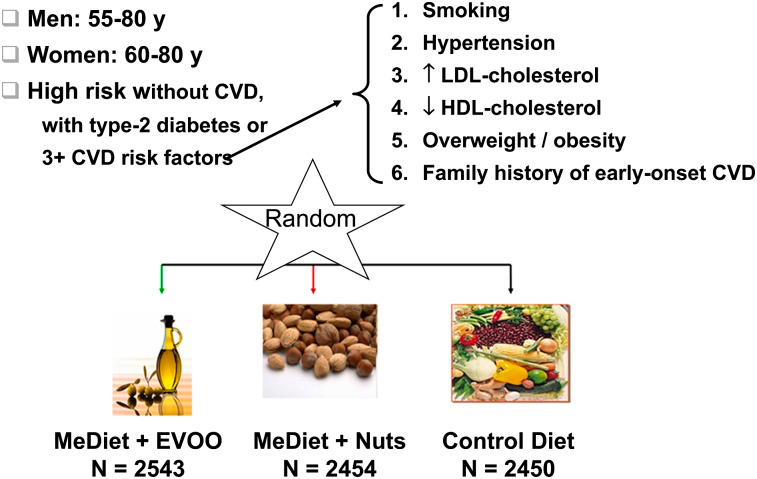
Design of the PREDIMED (Prevención con Dieta Mediterránea) study. CVD, cardiovascular disease; EVOO, extra-virgin olive oil; MeDiet, Mediterranean diet. Reproduced from Adv Nutr. 2014 May; 5(3): 330S–336S.
So what do we know about the Mediterranean diet so far?
I hope that having read this blog you’ve learned that there isn’t just one Mediterranean diet, but that the components that are shared across diets in Mediterranean countries make this type of diet highly anti-inflammatory. Mediterranean diets are also pretty high in fat, but they contribute to cardiovascular health. And because there’s an important vascular element they contribute to brain health, they’re neuroprotective by proxy. In a second blog I’ll be exploring how the Mediterranean diet provides an ideal model for multi-supplementation that’s naturally occurring, well documented and with a range of beneficial actions. Specifically, I’ll be reviewing the evidence that many of the individual “ingredients” in the Mediterranean diet actually work as brain “anti-ageing” agents.
The second part to this blog will be published next week and will look at individual vitamins, minerals and plant bioactives characteristic of the Mediterranean diet which can provide a naturally occurring model for multi-supplementation for a nutrient-depleted Western diet
Miguel Toribio-Mateas

Miguel is a nutrition practitioner, author and researcher with extensive knowledge and expertise in functional medicine and ageing science.
References:
Lopes Da Silva, S., Vellas, B., Elemans, S., Luchsinger, J., Kamphuis, P., Yaffe, K., Sijben, J., Groenendijk, M. & Stijnen, T. (2014) Plasma nutrient status of patients with Alzheimer's disease: Systematic review and meta-analysis. Alzheimers Dement, 10(4) pp. 485-502.
Open access available from http://www.ncbi.nlm.nih.gov/pubmed/24144963
Ros, E., Martínez-González, M. A., Estruch, R., Salas-Salvadó, J., Fitó, M., Martínez, J. A. & Corella, D. (2014) Mediterranean Diet and Cardiovascular Health: Teachings of the PREDIMED Study. Advances in Nutrition, 5(3) pp. 330S-36S.
Open access available from http://www.ncbi.nlm.nih.gov/pmc/articles/PMC4013190/
Related Cytoplan blogs
The Mediterranean diet: a naturally occurring model of multi-supplementation - Part 2
Mediterranean diet cuts heart and stroke risk
Official guidelines on fat intake: "Are we in need of a major overhaul"?
With many thanks to Miguel for this article. If you have any questions regarding the topics that have been raised, or any other health matters please do contact me (Amanda) by phone or email at any time.
amanda@cytoplan.co.uk, 01684 310099
Amanda Williams and the Cytoplan Editorial Team: Miguel Toribio-Mateas, Clare Daley, and Jo Doverman

We’d love your comments on this article
It’s easy, just post your questions, comments or feedback below