
Should you exercise according to your cycle? What women need to know about cycle syncing
Cycle syncing is gaining attention across social media and wellness spaces. It involves aligning habits with natural hormonal shifts that occur monthly, seasonally, and across the lifespan. Tuning into these rhythms may help ease challenging phases, support wellbeing, and deepen understanding of the body. Rather than a rigid rulebook, cycle syncing is best seen as a flexible guide shaped by individual needs and daily influences. This article explores the evidence and mechanisms behind cycle syncing, and why it may support better health outcomes.
Effect of our hormones on energy and recovery
Our major sex hormones are oestrogen, progesterone and testosterone, all of which have a significant effect on how we feel emotionally but also how physiologically we can utilise energy, build muscle and recover. These hormones are dictated by the brain which releases follicle stimulating hormone (FSH) and luteinising hormones (LH). So, lets briefly look at the functions of these hormones (Trickey, 2023)
FSH
Triggers the development of several follicles in the ovary which produce oestrogen.
Oestrogen
Promotes the growth of the uterine lining. It also has many other functions. As a growth-promoting hormone, it supports the growth and maintenance of muscle and bone, improves glucose uptake into cells for energy (insulin sensitivity), and promotes the production of feel-good neurotransmitters such as serotonin and dopamine (Zhu, 2023 and De Paoli, 2021). Thereby promoting mood, energy, growth and repair.
Luteinising hormone
Triggers ovulation or the release of the egg. After ovulation the empty follicle in the ovary produces progesterone.
Progesterone
Responsible for maintaining the uterus lining, preparing for pregnancy if the egg is fertilised. Progesterone is also considered to be a more calming hormone as it promotes the neurotransmitter GABA - associated with calm and relaxation (Stefaniak, 2024). Progesterone stabilises mood, supports sleep and increases body temperature.
Testosterone
Essential for libido, bone density, muscle mass and cognitive function, and, like oestrogen it is a growth promoting hormone (Pelz, 2022)
How hormones fluctuate across our cycle
Before we get into what cycle syncing is, it is important to highlight how our hormones change across the month. These changes can be divided into four phases, which in traditional Chinese medicine (TCM) mirror the seasons of the year.
Menstrual phase (Winter- Day 1-5)
This is where all reproductive hormones and hence energy levels are at their lowest, as the egg has not been fertilised and therefore menstruation is triggered. There is also some nutrient loss due to bleeding and therefore gentle exercise and nourishing foods should dominate (Pelz, 2022). FSH begins to be released to initiate the next cycle.
Follicular phase (Spring – Day 5-14)
FSH stimulates the follicle, allowing oestrogen levels to increase. As oestrogen rises, energy levels also begin to increase. This is where we can begin to feel more energised and can cope with more activity, so a great time for higher intensity and cardio exercise (Pelz, 2022).
Ovulation (Summer - Day 15-17)
A surge of LH triggers ovulation, the release of an egg. Oestrogen and testosterone both peak at ovulation. This is where we feel most energised, motivated and happy. During this time, we are at peak fertility, so libido is also high. We are also most able to build muscle during this time, so strength training is king (Pelz, 2022),
Luteal phase (Autumn – Day 17-menstruation)
The corpus luteum starts producing progesterone and all other hormones begin to decline. If no pregnancy occurs, progesterone will also decline at the end of the cycle, triggering ovulation. As oestrogen and testosterone wane, energy levels begin to decline. Progesterone leads to a calmer disposition (although low mood and anxiety can be an issue at this time), when women may be more introspective. At this time, gentler more relaxing exercise such as yoga and gentle walking may be more useful to prevent spikes in the stress hormones cortisol, which can disrupt progesterone (Pelz, 2022).
What is cycle syncing?
The basics of cycle syncing and exercise
Cycle syncing refers to adjusting exercise intensity and type in line with hormonal fluctuations across the menstrual cycle. This approach aims to optimise training outcomes while supporting hormonal health.
Certain exercise styles are preferred during each menstrual phase, the reasons are highlighted above but cycle syncing may be seen as:
Menstrual Phase
Gentle, restorative movement tends to feel best. Think walking, stretching, yoga, or low intensity mobility work.
Follicular Phase
As oestrogen rises, so does energy, motivation, and resilience. Higher intensity training, strength work, and intervals are usually well tolerated.
Ovulation
This is the peak window for strength and power. Heavy lifts, explosive movements, and performance focused sessions often feel great.
Luteal Phase
Progesterone increases and recovery slows. Lower intensity, calming movement - walking, steady state cardio, yoga, Pilates - is often more comfortable.
Working against these physiological patterns may contribute to worsening PMS and other symptoms of hormonal dysregulation (Qing, 2024).
Why exercising according to your menstrual cycle has become so popular
Although much of the evidence is anecdotal, it aligns with well-established physiological principles. Many women find that cycle syncing helps them feel more in tune with their bodies, supporting both fitness and wellbeing (Pelz, 2022). Perhaps most importantly, it gives permission to slow down— removing the guilt from taking a step back and prioritising calm, restorative practices when the body needs it most.
What are the reported benefits of cycle syncing?
Cycle syncing may support hormonal balance and symptom management, while helping to optimise exercise performance and recovery.
Some clinicians adopt a combined approach—integrating exercise with nutrition, supplementation, and fasting strategies—to better align with hormonal rhythms. While much of the evidence remains observational, reported outcomes include improvements in energy, body composition, strength, fitness, and female hormone-related conditions such as PMS, fertility challenges, and menopause-related symptoms (Pelz, 2022).
Is cycle syncing scientifically proven? A more nuanced view
What current research does and doesn’t show
Evidence in lifestyle medicine is complex. The gold standard - randomised, double-blind, placebo-controlled trials - are difficult to apply to multifaceted interventions like cycle syncing, where variables cannot be easily controlled. As a result, findings are often inconsistent or inconclusive, but this does not necessarily mean the approach is ineffective.
While social media has amplified both interest and confusion, many women report meaningful improvements in health and wellbeing. Given the well-established roles of hormonal fluctuations in energy, muscle adaptation, and neurotransmitter activity, it is plausible that certain behaviours may feel more effective or are better tolerated at different points in the cycle.
Cycle syncing is a low-risk approach that may enhance body awareness and self-regulation, if nothing else. In clinical settings, practitioners often report positive outcomes, supported by individual cases. This reflects the principles of personalised medicine, where the ‘n of 1’ allows individuals and their practitioners to experiment and identify what works best for their own physiology.
Why rigid cycle-based workout plans may not work for everyone
Some individuals thrive on structure and benefit from clear rules to support healthy habits. In this context, cycle syncing can be helpful, as it provides guidance that evolves throughout the month - offering structure without the need for rigidity, and often feeling more intuitive and less restrictive.
However, others may find strict frameworks limiting and difficult to maintain. It is also important to recognise that hormones, energy, and wellbeing are influenced by multiple factors, including sleep, stress, nutrition, and life stage (e.g. perimenopause).
Therefore, while cycle syncing can be a useful guide, it is most effective when applied flexibly rather than followed as a rigid prescription.
A more useful approach: Responsive training
Responsive training may be a preferable approach, as it considers the menstrual cycle while allowing for individual variation, intuition, and flexibility.
For example, even within the follicular phase - when oestrogen is rising - energy levels may still feel low. In these cases, it may be more effective to respond to the body’s signals rather than forcing high-intensity exercise based on a predefined cycle plan.
Ultimately, this approach reinforces a simple principle: working with the body, not against it. Responsive training can act as a starting point for developing a more aware and authentic relationship with our own physiology.
Nutrition matters too - supporting exercise and hormonal health together
Energy availability matters
Nutrition and nutrients to support individual phases include (Pelz, 2022):
Menstrual phase
Energy is low so focus on replenishing nutrients lost by menstruation including iron as well as warm comforting, nourishing meals. Also include anti-inflammatory foods (e.g. turmeric, ginger, oily fish) and magnesium-rich foods (dark leafy greens, dark chocolate) to help reduce pain and cramping during your period.
Follicular phase
Focus on protein-rich foods to support metabolism, alongside fresh, light salads. Fasting may also be better tolerated during this phase, as the body is generally more resilient to stress.
Ovulation
Avoid fasting, as adequate nutrients and protein are needed to support hormone metabolism. Include liver supporting foods such as broccoli, kale, onion and garlic (Bland, 2008)
Luteal
Support energy with whole carbohydrates such as sweet potato, squashes and some wholegrains, with lots of vegetables and lean protein. This is a better time for warm and nourishing meals.
Fuel and nutrients are required for the production, transport and detoxification of hormones and therefore adequate nutrition is essential. Working with the cycle as mentioned above may help to support this.
Key nutrients involved in energy and hormone support
All reproductive hormones are synthesised from cholesterol, meaning adequate dietary fat intake is essential for hormone production. In cases of extremely low energy or fat intake - such as in underweight individuals - hormone production can be impaired, contributing to issues such as amenorrhoea. Including healthy fats from sources such as olive oil, oily fish, nuts, seeds, and avocados is therefore important.
Micronutrients also play a key role as cofactors in hormone synthesis and metabolism (Trickey 2023 and Bland 2008):
- Oestrogen: vitamin D, B vitamins (B6, folate, B12), boron
- Progesterone: B6, zinc, magnesium, selenium, vitamin C, vitamin D
- Testosterone: zinc, magnesium, vitamin D, boron
Nutrients that support energy production include B vitamins, magnesium, CoQ10, alpha lipoic acid, and iron, among others. Given the complexity and interdependence of these systems, a broad-spectrum multivitamin and mineral can be a useful foundational support.
Recovery is part of hormonal health
Hormonal health and recovery are closely interlinked, each influencing the other. An optimal hormonal environment supports energy production and utilisation - for example, oestrogen plays a key role in insulin sensitivity, facilitating the uptake of glucose into cells for energy. This process is essential for fuelling performance, repair, and recovery.
When glucose utilisation is impaired, recovery can be compromised, alongside performance. In turn, inadequate recovery may increase inflammation, oxidative stress, and cortisol levels, all of which can negatively impact reproductive hormone balance.
Supporting recovery through adequate sleep, stress management, and a nutrient-dense diet can therefore have a positive downstream effect on hormonal health.
References
Bland J et al. (2008). Textbook of Functional Medicine.
De Paoli M, Zakharia A, et al. The Role of Estrogen in Insulin Resistance. The American Journal of Pathology, 2021; 191, 1490-1498
Pelz, M. (2022). Fast like a girl: A woman’s guide to using the healing power of fasting to burn fat, boost energy, and balance hormones.
Qing Liu, Yuhang Lin, et al. Psychological stress dysfunction in women with premenstrual syndrome, Heliyon, Volume 10, Issue 22, 2024.
Ruth Trickey. Women, Hormones and the Menstrual Cycle. Melbourne Holistic Health Group. 2023
Stefaniak M, Dmoch-Gajzlerska E, et al. Progesterone and Its Metabolites Play a Beneficial Role in Affect Regulation in the Female Brain. Pharmaceuticals (Basel). 2023 Mar 31;16(4):520
Zhu J, Zhou Y, et al. Role of estrogen in the regulation of central and peripheral energy homeostasis: from a menopausal perspective. Ther Adv Endocrinol Metab. 2023 Sep 15;14:20420188231199359.
-
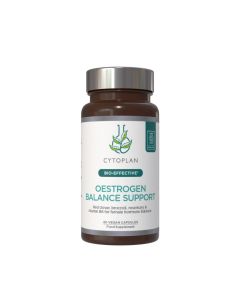 In stockOestrogen Balance Support
Targeted nutrient complex to support healthy oestrogen metabolism and female ...
£29.99 -
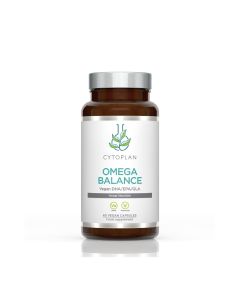
 In stockOmega Balance
Omega Balance is an omega 3 and 6 supplement for women, combining omega 3 wit...
£33.99 from