



The case for diet as a contributor to non-specific chronic low back pain
Our blog this week is written by nutritional therapist, physiotherapist and exercise specialist Kieran Macphail. In the article, Kieran discusses how diet can influence lower back pain and how dietary and lifestyle changes can help relieve it.
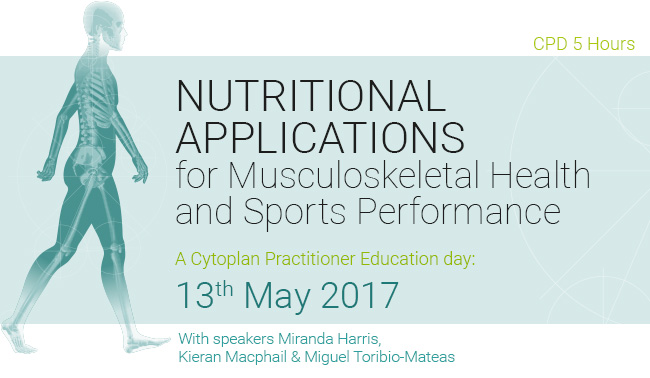
Kieran will be speaking at our Practitioner Education Day in May. To find out more about the event; ‘Nutritional applications for musculoskeletal health and sports performance’, please follow this link.
Low back pain (LBP) is the leading cause of disability worldwide and is becoming increasingly prevalent. Non-specific low back pain represents 90% of the LBP population, and there is no effective cure. Previously it has been assumed low back pain spontaneously resolves typically within 6-weeks based on return to work as an outcome. However, when pain is assessed it appears patients may be returning to work despite their pain. Indeed whilst spontaneous recovery is reported in approximately 33% after 3 months, 71% still have pain after 1 year. There have been many studies highlighting the lack of correlation between radiologic findings and low back pain in asymptomatic and symptomatic individuals. Epidemiologic research has shown the incidence of low back pain is 2-4 times higher in Sweden, Germany and Belgium, compared with Nigeria, South China, and South East Asian farmers. Within lower income countries the incidence is lower in rural areas. Interestingly these areas, with lower incidence of low back pain, have higher daily mechanical demands. Furthermore, a recent systematic review found a strong positive correlation between a country’s development and the prevalence of low back pain. These epidemiological features are similar to the prevalent conditions of western society such as diabetes, heart disease and cancer. Thus it may be that diet and lifestyle factors play a role in the pathogenesis of CLBP. In understanding the potential role of diet as a contributor to non-specific chronic low back pain it’s helpful to understand how we experience pain and how this can be influenced by diet. Pain can be viewed as a neurotag, an output of the neuromatrix, a best guess of the organism’s perceived threat, and as an emotion regulated like temperature in order to maintain homeostasis (see editor’s note). Definitions of emotion vary, Scherr (2005) suggests they are more than sensation, and produce a drive to action as well, thus suggesting pain can be viewed as an emotion. Traditional explanations of mechanical pain outline how it starts as nociceptive input from a nocicepetor through group IV afferents, otherwise known as group C nerve fibers in the periphery. They synapse with second order neurons in the dorsal horn of the spinal cord, where they become part of the spinothalamic tract. From there, thalamocortical fibers, our third order neurons, transmit noxious stimuli to the limbic system where the brain “decides” to place a pain “neurotag” at the location of the original nociception. Our understanding of this process has progressed and we know that nociception is neither sufficient nor necessary for the experience of pain. The most widely accepted theory of pain is the neuromatrix described by Melzack (1999) which suggests that pain is an output and ultimately a decision by the brain.
The most frequently discussed mechanism for diet affecting chronic low back pain is the mechanical impact of excess weight. Obesity and being overweight are well-established risk factors for non-specific low back pain. More mechanical load means that similar activities will result in greater mechanical nociception and thus increase the likelihood of perceived pain. Less frequently considered are the indirect effects of nutrition related conditions such as irritable bowel syndrome which may impair motor control of the lumbar spine through inhibiting deep stabilizer muscles essential to lumbar spine stability. Whilst both these mechanisms work mechanically they simultaneously affect systemic inflammation as well.
In addition to the load of increased weight bearing, adipose tissue produces pro-inflammatory mediators, which can directly increase nociceptive sensitivity, such as C-reactive protein (CRP), interleukin 6 and tumour necrosis factor-α (TNFα). Briggs et al. (2013) deepened our understanding of this by demonstrating the pro-inflammatory cells produced by adipose tissue appear to have a greater association with reported pain than the mechanical effects of excess weight. TNFα activates the endothelium of blood vessel walls to produce adhesion molecules as part of atherosclerosis. Atherosclerosis of the aorta and stenosis of the arteries supplying the lumbar spine are associated with disc degeneration and low back pain. Furthermore, in a study of over 18,000 Norwegian subjects with and without LBP over 11 years there was an association between low levels of HDL lipids and elevated triglycerides after adjusting for confounding variables. Similarly, low vitamin D status is associated with LBP among Egyptian women. All these factors can be seen as markers of chronic systemic inflammation and this may be the common thread explaining the associations. In particular CRP may be a marker of inflammation as well as a causative factor in chronic low back pain.
Looking specifically at CRP as a marker of systemic inflammation;
- The variety of fruit and vegetable intake, but not the quantity, has been found to be inversely related with CRP levels.
- Vitamin C intake from fruit and plasma vitamin C levels have been found to be inversely related to CRP levels.
- Friso et al (2001) divided 891 participants in to two groups, those with a CRP above 6.0 mg/l and those with a CRP below 6.0 mg/l.
- The interest in vitamin D and CRP has come from cardiovascular research. Consistently low vitamin D is inversely associated with CRP levels, high CRP levels are inversely associated with vitamin D levels.
- Interestingly, in over 21,000 subjects consumption of 20g of dark chocolate every 3 days was found to be associated with optimal CRP levels.
In chronic pain the threshold for firing of the group IV afferents and other nociceptors is decreased. In this state it takes fewer inflammatory mediators such as prostaglandins, leukotrienes, bradykinin, serotonin and cytokines to bind on their respective receptors on the nociceptors to stimulate nociceptive input. Furthermore this may be coupled with an increase in the level of pro-inflammatory mediators due to diet. This reduces the need for additional pro-inflammatory mediators to bind to the afferent to reach threshold. Nonetheless Perry et al’s (2010) epidemiological research in adolescents with back and neck pain suggested it was hard to associate any specific nutrient with back pain or even poor dietary patterns. These included testing for correlations with fatty acids, protein, carbohydrate, vitamins and minerals. Even when considering different sexes, food groups and dietary patterns. These findings may be due to the complex nature of the interactions involved. As whilst the pain experience is complex, and for example an elevated level of systemic inflammation would decrease the nociceptive threshold in low back pain, there may be little mechanical contribution, good psychology and other positive factors contributing. Thus the diet needs to be viewed within the broader context of the neuromatix and as a homeostatic emotion.
In summary, low back pain is the leading cause of disability worldwide and non-specific low back pain makes up 90% of these cases. Epidemiological research suggests that western style development increases prevalence. Poor diet can lead to obesity and digestive conditions that can increase mechanical load on the spine and decrease the effectiveness of core stability. Potentially more significantly, diet can modify the level of systemic inflammation directly reducing the amount of noxious stimulation required for the brain to receive a nociceptive impulse that contributes to the pain experience. However, studying these processes in vivo is challenging due to complex nature of factors that influence the emotion pain.
Editor’s Note
A neurotag is a group of neurons that fire together to elicit a particular response, for example, perception of pain or a thought. Neurons can be members of more than one neurotag. You may have heard of the phrase “neurons that fire together, wire together”.
The neuromatrix model of pain described by Melzack proposes that pain is a result of combined neural activity in many areas of the brain which together form a network. The neuromatrix can generate pain even without a sensory trigger. This provides an explanation for the phenomenon of “phantom limb” pain in which people who have had a limb amputated feel pain that seems to be coming from that limb.
Kieran Macphail MSc, BSc (Hons), BSc
 Kieran is a nutritional therapist, physiotherapist and exercise specialist who has been working in the rehabilitation field since 2004. He presents on a wide range of topics and has published multiple papers on chronic pain as well as contributing a chapter on the limbic system and chronic pain to a text book on the limbic system. He is currently doing a PhD titled “Chronic Low Back Pain, Diet and Lifestyle and C-Reactive Protein”. His larger project is to refine an assessment and treatment algorithm for chronic low back pain.
A Cytoplan Practitioner Education Day
For more information and to book your place, please follow this link.
Related Cytoplan blog posts
Yoga - a remedy for back pain?
Elimination diets - pinpointing the source of undiagnosed symptoms
Celadrin supplement - support for painful and inflamed joints?
With many thanks to Kieran for this article, if you have any questions regarding the health topics that have been raised please don’t hesitate to get in touch with me (Clare) via phone; 01684 310099 or e-mail (clare@cytoplan.co.uk).
Amanda Williams and the Cytoplan Editorial Team: Kieran Macphail, Helen Drake, Clare Daley and Joanna Doverman

We’d love your comments on this article
It’s easy, just post your questions, comments or feedback below