
CBD: history of use and benefits to health
Our guest writer for this blog, Tony Reeves, is an industry expert for CBD. He is a board member and UK lead for the European Industrial Hemp Association (EIHA), representing the CBD industry to the MHRA, Home Office, FSA, HPRA, FSAI, parliamentarians and Whitehall, contributing to presentations to Brussels on various matters including novel food regulations, CBD and THC levels in food, food supplements, beverages and cosmetics.
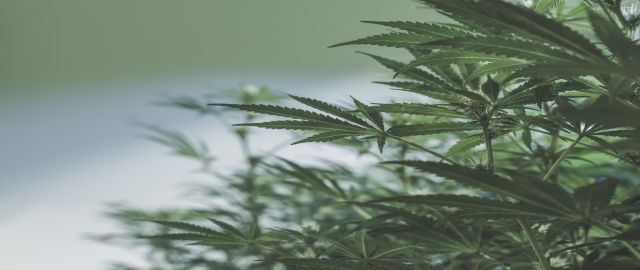
Like all the best health & nutrition stories, ours begins with a plant, in this case the plant is called Cannabis sativa, or hemp and it’s been with us a very long time. In fact, it is probably one of the very first plants to be cultivated, being used in Japan since the Stone Age and evidence of its consumption found in the Japanese Oki Islands from around 8000 BC1. However, the plant was around way before humans arrived and evidence suggests that Cannabis first emerged by splitting from its closest relative, Hops, during the mid-Oligocene, or over 27.8 million years ago!2 Put another way, humans and indeed all mammals, have been exposed to Cannabis, Cannabinoids and all of its other compounds throughout their evolution and the proof of that is clear in our biochemistry.
All mammals, us included, have what is called an ‘endocannabinoid system’ or ECS. It is comprised of endogenous cannabinoids (endocannabinoids), cannabinoid receptors, and the enzymes responsible for the synthesis and degradation of endocannabinoids. The ECS is perhaps the most important physiologic system involved in establishing and maintaining human health, encompassing numerous processes including appetite, pain, mood, memory, and homeostasis. It was fully characterised back in the 1980’s and in the early 90’s the first endocannabinoid was isolated, and they named it anandamide, after the Sanskrit word for ‘joy’ or ‘bliss’3. This discovery confirmed that the human brain produces cannabinoids of its own, which bind with cannabinoid receptors throughout the brain and body. So, our body produces its own cannabinoids (endocannabinoids) and our plant also produces cannabinoids (phytocannabinoids) of which Cannabidiol or CBD is our favourite!
CBD is the main, non-intoxicating cannabinoid found in the plant and it has a well-proven safety profile and works in close ‘collaboration’ with our own body via the ECS. To explain how this ‘collaboration’ works to our advantage, we need to talk more about anandamide. As mentioned, it was the first endocannabinoid to be discovered and participates in the ECS by binding to cannabinoid receptors, sending chemical messages between nerve cells (neurons) throughout the nervous system. Anandamide has important anti-inflammatory, anti-cancer and cardiovascular properties and is closely involved in the regulation of body temperature, locomotion, feeding and anxiety. It is also believed to be involved in male and female fertility. However, anandamide is present at very low levels and has a very short half-life due to the action of the enzyme fatty acid amide hydrolase (FAAH) which breaks it down shortly after production. This is where the benefits of consuming CBD come in. As CBD is an inhibitor of FAAH, this effectively leads to an elevated level of anandamide and, by definition, profound and enhanced benefits for our body and mind.
Similarly, CBD supports the activity of the other main endocannabinoid known as 2-AG; a key regulator of neurotransmitter release involved in a wide range of functions such as emotion, cognition, energy balance, pain sensation and neuroinflammation4.
In any discussion around CBD, we need to address perhaps that most famous of cannabinoids, tetrahydrocannabinol, or THC. THC is the principle intoxicating cannabinoid found in the plant and only those strains with consistently low levels of THC (0.2% to 0.3%) are permitted for use in the manufacture of consumer CBD products. In products that use CBD isolate (the purest form of CBD), the levels of THC are so low as to be non-detectable by highly sensitive analytical procedures. Basically, there is no chance of becoming intoxicated or breaking any laws in consuming these products, and would be akin to worrying about opiate addiction through the consumption of poppy seed buns!
We are often asked by people who have yet to try CBD “how does it feel when you take it?” Well, we are all different and my experience may differ from yours. For me, I find it produces the clarity of mind that enables me to start the day with a sense of purpose and focus and the peace of mind that is essential to a good night’s sleep when the day is done.
So, CBD offers real benefits to us all, especially as part of a healthy lifestyle, balanced diet and a nutritional supplement regime tailored to your personal situation and requirements. However, there is more good news, as the plant from which the CBD originates provides exceptional benefits to our environment, agriculture and indeed the planet itself.
Cannabis sativa, or more specifically the low THC varieties we use called ‘hemp’, can be refined into a vast and diverse range of commercial products (10,000 +) including paper, textiles, clothing, biodegradable plastics, paint, insulation, biofuel, food and animal feed. Hemp can be grown without the use of herbicides, pesticides or fungicides; a natural choice for organic cultivation and is in the top 5 for biodiversity friendliness, performing better than all major crops such as wheat, maize or rapeseed5.
Due to its vigorous growth, hemp is known to be a pioneer plant that can be used for land reclamation and indeed phytoremediation; ‘cleaning’ land polluted by heavy metals. Hemp is a valuable preceding crop in rotations. After cultivation, the soil is left in optimum condition; for example, delivering a 10–20% higher wheat yield. Another benefit of its rapid growth is as a highly efficient ‘carbon conversion’ tool – considerably more effective than agro-forestry.
Hemp seeds contain almost 32% protein and that’s more than chicken, tuna, beef or eggs. It is also over twice that of quinoa and nearly four times that of tofu. Even better, the types of protein found within the seed (edestin and albumin) are both high-quality storage proteins, which are easily digested and contain nutritionally significant amounts of all essential amino acids.
In other words, helping our own body maintain homeostasis through CBD supplements also contributes to the health of the planet.
About the author Tony Reeves is an industry expert for CBD. He is a board member and UK lead for the European Industrial Hemp Association (EIHA), representing the CBD industry to the MHRA, Home Office, FSA, HPRA, FSAI, parliamentarians and Whitehall, contributing to presentations to Brussels on various matters including novel food regulations, CBD and THC levels in food, food supplements, beverages and cosmetics. He is also a member of the UKAS-led ‘CBD Food Product Approval Expert Group’ (which includes participants from the FSA and the Home Office), member of the Food & Drink Federations, CBD Working Group and a consultant to major organisations in North America and Europe including THG. He is also closely engaged with numerous stakeholders in the cannabis industry across multiple geographies (e.g. Europe, NA, APAC) encompassing growers/genetic specialists, extractors, brand owners, distributors, retailers (including the UK’s leading chains), lobbyists, global consulting firms and investors.
If you have questions regarding the topics that have been raised, or any other health matters, please do contact our team of Nutritional Therapists. nutrition@cytoplan.co.uk 01684 310099
References:
- https://csalabs.com/the-early-history-of-cannabis-and-hemp-in-asia/
- https://en.wikipedia.org/wiki/Cannabis#Chromosomes_and_genome
- https://en.wikipedia.org/wiki/Anandamide#:~:text=The%20name%20'anandamide'%20is%20taken,%2C%20delight%22%2C%20and%20amide.
- https://sensiseeds.com/en/blog/cannabinoid-science-101-what-is-2-arachidonoylglycerol-2-ag/
- https://d2416f5wotnqu0.cloudfront.net/media/amasty/blog/uploads/2020/09/Hemp-a-real-green-deal_EN.pdf