


Evidence-based beauty from within
For this week’s blog, we have invited Miguel Toribio-Mateas to share with us his knowledge on the key natural ingredients known to have a tangible effect on skin. “Everyone loves looking good, whatever their age” says Miguel, who also tells us that “nutrition, good moisturisation, and good supplements can help keep skin glowing and looking its healthiest, regardless of age”. And at 46, Miguel does seem to have been walking the walk as well as talking the talk. But apart from looking like he has been applying some of this knowledge to himself, he will also be substantiating these claims with some good quality scientific evidence.
As a nutrition practitioner, I am happy to experiment a little with foods and natural ingredients sourced from plants that have a record of safe traditional use. A little trial and error has never hurt anyone, so I am happy to eat two pieces of broccoli instead of one, even if precise evidence on this type of intervention is lacking. But as a clinical scientist I always seek good evidence that an intervention actually works in humans (not just in the laboratory) so that I am confident that results will bear some degree of reproducibility. The better the evidence that something works, the more likely you are to experience a benefit, so for me – if I am to invest in natural beauty, I still need clinical evidence. It isn’t really an option, it’s a necessity. In this blog, I am focusing on skin and on the combination of foods and nutraceuticals that I use myself and that I’m happy to recommend to my clients to support that “glow from within” look.
Cocoa extract
Cocoa beans from the Theobroma cacao tree fruit are dried and the fatty seeds fermented. This is where cocoa solids and cocoa butter are extracted from. Cocoa is the main ingredient in chocolate. At least in dark chocolate! Cocoa is loaded with nutrients that can positively affect health. In fact, cocoa is one of the best sources of antioxidants on earth.
For decades, dermatologists have been intrigued about the effects of dietary antioxidants – from foods and from food supplements – as a strategy to protect skin against photo-ageing. In fact, the effects of oral consumption of high-flavanol cocoa products on skin photo-ageing have been studied thoroughly, with good clinical evidence that moderately photo-aged skin can benefit from regular cocoa flavanol consumption - which has positive effects on facial wrinkles and elasticity. However, unfortunately, during conventional chocolate making, flavanols are damaged by the manufacturing processes, so unless your chocolate is “flavanol-enriched”, i.e. chocolate with the addition of supplementary flavanols, then that won’t do the trick. But with regard to chocolate that is flavanol enriched, or indeed a food supplement containing cocoa flavanols, there is clinical evidence that eating chocolate rich in flavanols regularly enhances the skin’s ability to protect itself from the effects of harmful ultra-violet radiation.1,2 Not an excuse to leave the house with no sunscreen, but as with many things in health, a multi-pronged approach is always best. Particularly because cocoa flavanols don’t just increase resistance against ultra violet (UV)-induced inflammatory damage (erythema) and optimise transepidermal water loss, keeping skin looking “plumper,”3 they have also been found to acutely increase dermal blood flow and oxygen saturation.3
Maritime pine trees grow in countries on the Mediterranean sea. Their bark is rich in flavonoids and is used to make food supplements that have powerful physiological effects. The extracts include oligomeric proanthocyanidins that have been widely studied for over 40 years, with more than 160 clinical trials and 420 scientific publications, ensuring safety and efficacy as an ingredient in food supplements.
One of the things that pine bark extract does extremely well is to help increase skin hydration and elasticity.4 Effects are most likely due to an increased synthesis of extracellular matrix molecules such as hyaluronic acid and possibly of collagen too. But oral supplementation with pine bark extract also protects skin from UV radiation, as tested in recent clinical trials.4,5 Amounts as little as 40mg / day maritime pine bark extract (providing 95% proanthcyanidins) have been seen to reduce hyperpigmentation of human skin, improve skin barrier function and extracellular matrix homeostasis. I like taking care of my skin and keeping it young and vibrant-looking, so pine bark extract is definitely one of my favourite “plant-based supplements”.
Astaxanthin (and a little on bilberry too)
Astaxanthin is a red pigment that belongs to a group of phytonutrients called carotenoids. It occurs naturally in certain algae (the rainwater microalgae Haematococcus pluvialis) and causes the pink colour in salmon, trout, lobster, prawns, and other seafood. Astaxanthin is one of those extremely powerful carotenoids that is effective at tiny physiological doses. It has been found to have a range of beneficial effects for a number of organs. But focusing on its skin-protecting properties it works by means of its lipid-loving nature. It is able to penetrate deep inside the fatty layer that provides “cushioning” to the skin, keeping it healthy by reducing damage by free radicals, thereby contributing to facial skin rejuvenation.6
Dermatologists are still trying to figure out how astaxanthin actually effects skin physiology, but there is increasing evidence that astaxanthin works on skin homeostasis as a photoprotective, antioxidant, and anti-inflammatory agent.7,8
Bilberry extract
As with other “beauty from within” ingredients, when looking for a “skin” nutraceutical I wouldn’t focus entirely on one single item. My professional advice would be to focus on the synergy that emerges out of a nutrient combination. When taken alongside a meal that contains other polyphenols, e.g. extra virgin olive oil, lycopene from tomatoes, or beta-carotene from carrots, there is synergy and potentiation that leads to increased bioavailability of these compounds.9,10 That’s to me is a very powerful argument that deserves some careful consideration when pondering about what foods and nutraceuticals might combine well in order to maximise the protection to skin. Some very interesting compounds from bilberry, for example, only have emerging clinical data on non-skin applications such as varicose veins11 but they are known to have a high ORAC (Oxygen-Radical Absorbing Capacity),12 and provide compounds known as anthocyanins that are very similar to those found in pine bark extract .This means they’re highly likely to work well in combination with other pine bark and other polyphenol-rich plants.
Lycopene, beta-carotene and lutein
Continuing with my synergy argument, I believe lycopene – a carotenoid found in tomatoes – and beta-carotene – found in carrots and pumpkin, amongst other vegetables - work beautifully alongside astaxanthin and pine bark extract for glowing skin that has beautiful elasticity. Oral supplementation with a combination of these two powerful antioxidants has been found to dampen down inflammation caused by UV radiation, decreasing levels of cytokines such as IL-6 and TNF-alpha and protecting skin from long-lasting free radical damage.13 Lycopene has also been found to help with skin health in people with a tendency to develop acne.14 In combination with lutein - another carotenoid present in spinach, kale and egg yolks, lycopene has been found to protect against solar radiation-induced health damage.15
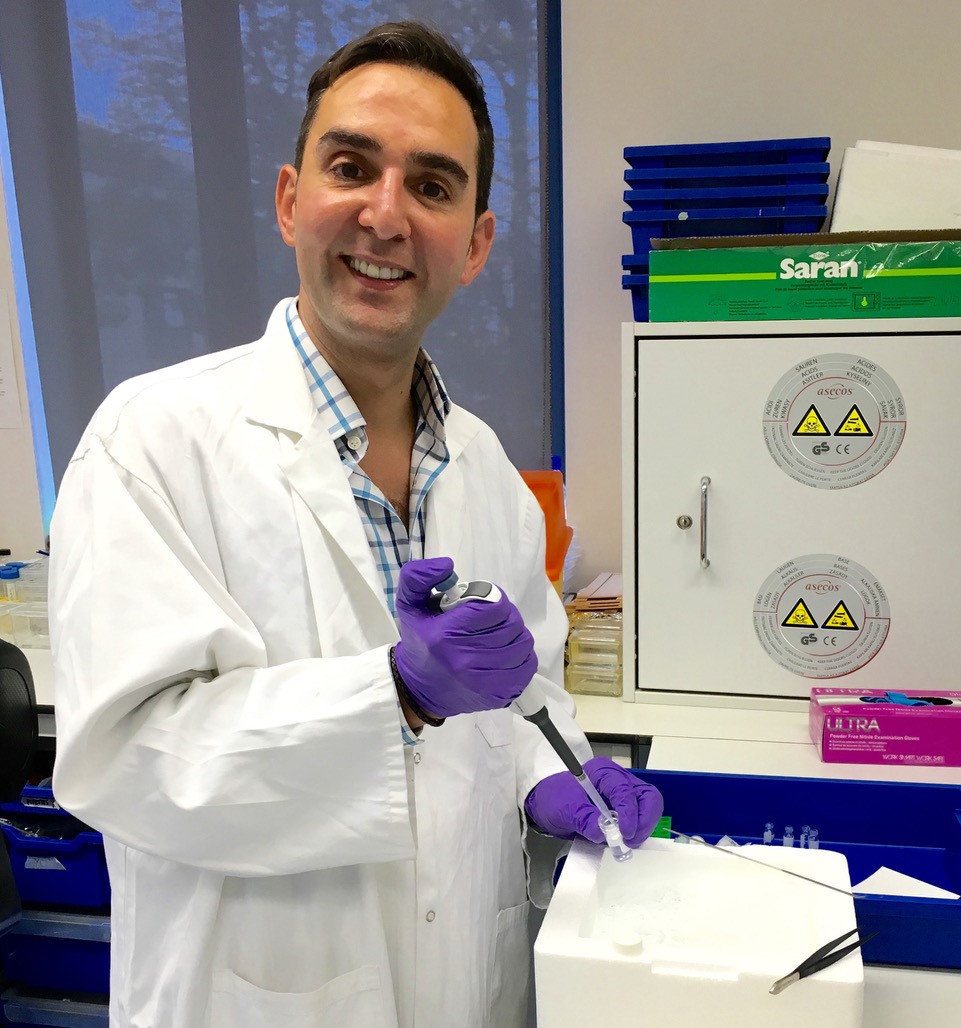 Miguel is a doctoral researcher in clinical nutrition practice with wide-angle, first-hand experience of the research process. From the laboratory bench, having completed a lab-based Masters in Clinical Neuroscience focusing on brain ageing, to the design and implementation of human clinical trials on the effect of fermented foods on mood and cognition as leading investigator at the “Bowels and Brains™️” project at the London Agri-Food Innovation Clinic. Miguel has been delivering quality individualised nutrition care to his clients from 2009, translating complex science findings into meaningful recommendations that can be used by people like you to improve health and wellbeing. Miguel’s background includes 15+ years in senior consulting and training roles in life sciences and medical publishing, having trained clinicians and scientists around the world.
With many thanks to Miguel for this blog; if you have any questions regarding the health topics that have been raised, please don’t hesitate to get in touch with Clare via phone; 01684 310099 or e-mail clare@cytoplan.co.uk
Related Cytoplan products CytoProtect Hair, Skin and Nails (New) - A synergistic multi-nutrient and antioxidant one-a-day complex that has been specially formulated to help support the health of hair, skin and nails. The formula features cocoa extract, maritime pink bark extract, bilberry extract, beta carotene, lycopene, lutein, 1-3, 1-6 beta glucan and astaxanthin providing a broad spectrum of antioxidants to support the health of hair, skin and nails. This product also include MSM (methylsulfonylmethane), a source of organic sulphur as sulphur is found naturally in hair, skin and nails, along with selected vitamins and trace minerals. Phytoshield - A powerful phyto-antioxidant nutrient complex containing high levels of flavonoids and carotenoids. Krill Oil – Omega-3 fatty acids EPA and DHA along with astaxanthin Omega Balance or Blackcurrent Seed Oil – Each one provides a source of the omega-6 fatty acid GLA Acidophilus Plus – Live bacteria supplement containing 9 strains of friendly bacteria Wholefood Multi – all round multivitamin and mineral complex
References
- Williams, S.; Tamburic, S.; Lally, C. Eating chocolate can significantly protect the skin from uv light. J Cosmet Dermatol 2009, 8, 169-173.10.1111/j.1473-2165.2009.00448.x
- Yoon, H.S.; Kim, J.R.; Park, G.Y.; Kim, J.E.; Lee, D.H.; Lee, K.W.; Chung, J.H. Cocoa flavanol supplementation influences skin conditions of photo-aged women: A 24-week double-blind, randomized, controlled trial. J Nutr 2016, 146, 46-50.10.3945/jn.115.217711
- Heinrich, U.; Neukam, K.; Tronnier, H.; Sies, H.; Stahl, W. Long-term ingestion of high flavanol cocoa provides photoprotection against uv-induced erythema and improves skin condition in women. J Nutr 2006, 136, 1565-1569.10.1093/jn/136.6.1565
- Grether-Beck, S.; Marini, A.; Jaenicke, T.; Krutmann, J. French maritime pine bark extract (pycnogenol(r)) effects on human skin: Clinical and molecular evidence. Skin Pharmacol Physiol 2016, 29, 13-17.10.1159/000441039
- Furumura, M.; Sato, N.; Kusaba, N.; Takagaki, K.; Nakayama, J. Oral administration of french maritime pine bark extract (flavangenol((r))) improves clinical symptoms in photoaged facial skin. Clin Interv Aging 2012, 7, 275-286.10.2147/cia.S33165
- Chalyk, N.E.; Klochkov, V.A.; Bandaletova, T.Y.; Kyle, N.H.; Petyaev, I.M. Continuous astaxanthin intake reduces oxidative stress and reverses age-related morphological changes of residual skin surface components in middle-aged volunteers. Nutr Res 2017, 48, 40-48.10.1016/j.nutres.2017.10.006
- Aiello, A.; Accardi, G.; Candore, G.; Carruba, G.; Davinelli, S.; Passarino, G.; Scapagnini, G.; Vasto, S.; Caruso, C. Nutrigerontology: A key for achieving successful ageing and longevity. Immun Ageing 2016, 13, 17.10.1186/s12979-016-0071-2
- Ito, N.; Seki, S.; Ueda, F. The protective role of astaxanthin for uv-induced skin deterioration in healthy people-a randomized, double-blind, placebo-controlled trial. Nutrients 2018, 10.10.3390/nu10070817
- Linnewiel-Hermoni, K.; Khanin, M.; Danilenko, M.; Zango, G.; Amosi, Y.; Levy, J.; Sharoni, Y. The anti-cancer effects of carotenoids and other phytonutrients resides in their combined activity. Arch Biochem Biophys 2015, 572, 28-35.10.1016/j.abb.2015.02.018
- Dhuique-Mayer, C.; Servent, A.; Descalzo, A.; Mouquet-Rivier, C.; Amiot, M.J.; Achir, N. Culinary practices mimicking a polysaccharide-rich recipe enhance the bioaccessibility of fat-soluble micronutrients. Food Chem 2016, 210, 182-188.10.1016/j.foodchem.2016.04.037
- Belcaro, G.; Dugall, M.; Luzzi, R.; Corsi, M.; Ledda, A.; Ricci, A.; Pellegrini, L.; Cesarone, M.R.; Hosoi, M.; Errichi, B.M., et al. Management of varicose veins and chronic venous insufficiency in a comparative registry with nine venoactive products in comparison with stockings. Int J Angiol 2017, 26, 170-178.10.1055/s-0036-1597756
- Bagchi, D.; Sen, C.K.; Bagchi, M.; Atalay, M. Anti-angiogenic, antioxidant, and anti-carcinogenic properties of a novel anthocyanin-rich berry extract formula. Biochemistry (Mosc) 2004, 69, 75-80, 71 p preceding 75
- Groten, K.; Marini, A.; Grether-Beck, S.; Jaenicke, T.; Ibbotson, S.H.; Moseley, H.; Ferguson, J.; Krutmann, J. Tomato phytonutrients balance uv response: Results from a double-blind, randomized, placebo-controlled study. Skin Pharmacol Physiol 2019, 32, 101-108.10.1159/000497104
- Chernyshova, M.P.; Pristenskiy, D.V.; Lozbiakova, M.V.; Chalyk, N.E.; Bandaletova, T.Y.; Petyaev, I.M. Systemic and skin-targeting beneficial effects of lycopene-enriched ice cream: A pilot study. J Dairy Sci 2019, 102, 14-25.10.3168/jds.2018-15282
- Grether-Beck, S.; Marini, A.; Jaenicke, T.; Stahl, W.; Krutmann, J. Molecular evidence that oral supplementation with lycopene or lutein protects human skin against ultraviolet radiation: Results from a double-blinded, placebo-controlled, crossover study. Br J Dermatol 2017, 176, 1231-1240.10.1111/bjd.15080
We’d love your comments on this article
It’s easy, just post your questions, comments or feedback below