

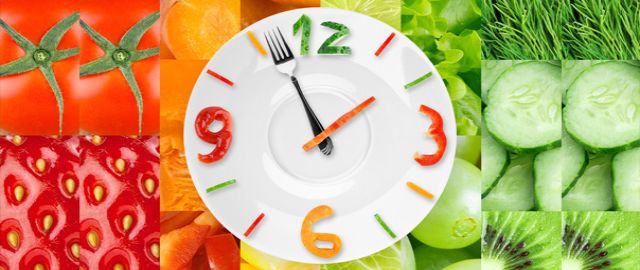
'Time Restricted Feeding' - It's not just what you eat, but when you eat
“Nutritional therapist Jeanette Hyde has come up with the perfect plan to balance your gut bacteria, lose up to 13 pounds and improve mood, skin and immunity”, reported The Daily Telegraph just two weeks ago in reference to her brand new book The Gut Makeover. Jeannette Hyde is a registered Nutritional Therapist with a special interest in gut health, and is a regular commentator on nutrition on the BBC and in print and online media.
Her plan to improve overall health is centred around the 'microbiome'; a collection of around 100 trillion bacterial cells (the highest concentration of which is located in the gut) weighing on average 1.5 kg and considered by many to be the 'forgotten organ' in the human body.
However it is not just about 'what' you eat that controls the bacterial diversity of your 'microbiome', but also 'when' you eat. In this week's article Jeannette, who like many Nutritional Therapists is a firm believer that “the Gut is the key to all health”, discusses 'Time Restricted Feeding’. 'TRF' means restricting your eating to a 12 hour window each day - this has a positive effect on the bacterial diversity of your 'microbiome' and can help you to lose weight and maintain good overall health.
We also then discuss how fasting can have a positive impact on reducing the risk of chronic conditions such as diabetes and alzheimer's.
Recent studies show that choosing a special window of time to eat in each day, may help with weight loss. While researching my new book, The Gut Makeover, I became interested in the theme of Time Restricted Feeding (TRF) and I now recommend it to readers looking to lose weight. My book focuses on including the right types of food to boost your 'microbiome', the kilo and half of bacteria, mainly in the digestive system, which is now understood to be connected to our weight, mood, immune system, and skin health – to name just a few. But what also seems to be emerging, is that it’s not just what you eat, but when you eat, which can influence the diversity of the 'microbiome' for a knock on impact on your weight and rest of your health. Two Salk Institute studies caught my eye on this: The first (Zarrinpar, 2014) was on mice fed a high fat diet – which traditionally you’d expect to make them gain weight. One group ate around the clock, the other group only had access to food in an 8-hour window. Both consumed the same amount of calories overall. But the microbiome of the TRF animals looked different to the other group and had more bacterial diversity. It is now becoming apparent that the diversity of bacteria in the microbiome is key to health and has been linked with metabolism and weight. The researchers also measured the stool samples of both groups and the TRF mice had more sugar in their stools meaning they had extracted less calories from the food they had eaten than the other group. Interesting. Another study (Chaix, 2014) allowed mice to eat the same calorie count of a high-fat high-sucrose diet in a 9-hour, 12-hour, or 15-hour window. The test showed that the shorter the feeding window, the less impact the high fat high sucrose diet had on weight gain. The authors concluded that: “TRF for 12 hours or shorter offers metabolic benefits irrespective of diet type.” So translating these findings to every day life, I recommend a 12-hour eating window in my book as this is highly-practical for many people and easy to adopt. For example, if you eat breakfast at 8am, make sure your evening meal is over by 8pm. Individuals following The Gut Makeover for a month have on average lost 3.5k (7.7 pounds) without counting calories or going hungry, while including fats in their diets such as nuts and seeds, virgin olive oil and avocados. The book includes more than 50 delicious recipes and encourages massive variety and diversity of diet, especially plants every day to support your microbiome. The overnight fast is easy to implement and you can choose when the 12 hours start and finish depending on what else is going on in your busy life. You may drink water during the 12-hour overnight fast, but nothing else. For me, this has been a simple adjustment. It means not revisiting the fridge out of boredom at 10pm, and there haven’t been any unpleasant hanger (hunger/anger) issues. Try it for a month... 'The Gut Makeover' (£14.99, Quercus Books), by Jeannette Hyde, is available from your local book shop or Amazon.
With many thanks to Jeannette for this article. As has been mentioned in a number of our blogs throughout 2015, it is not just digestion and weight loss that a healthy 'microbiome' is so essential for. Indeed, scientific research is linking increasing numbers of health conditions to the 'microbiome'; from immunity, mood swings, and mental health to skin health etc, and diet is key to this, so here are some tips on what to eat and what to avoid: Do:
- Increase your intake of dietary fibre by eating plenty of vegetables, fruits, nuts and seeds. Be sure to choose a wide variety of vegetables including dark green vegetables, on a daily basis. Fibre feeds good bacteria and helps with regular bowel movements - which is essential for maintaining a healthy gut.
- Eat Fermented foods - such as plain yoghurt, kefir and fermented vegetables.
- Take a daily live bacteria supplement. Follow the link to see our range.
- Eat foods high in polyphenols such as blueberries and dark chocolate (ie 70% or 85%) as these also encourage the growth of good gut bacteria.
Eat a diet high in refined carbohydrates, sugars and processed foods! - These will have a negative effect on your 'microbiome'.
Could Fasting reduce the risk of Chronic conditions?
As Jeannette has discussed in this article, restricting your eating to an 8-12 hour period each day can increase the bacterial diversity of your 'microbiome' and is also associated with further health benefits.
Research is now suggesting that metabolic changes associated with 'time restricted feeding' or fasting could be powerful enough to reduce the risk of conditions such as Alzheimer's and Diabetes.
Alzheimer's
Fasting for around 3 hours before bedtime and an overnight 12 hour fast is recommended. Fasting for 3 hours before bedtime helps to ensure the evening meal is well digested before sleep, when the digestive process slows down. This helps to avoid fermentation of undigested proteins, which can result in the release of toxic substances in the blood stream.
The 12 hour fast is important because, during a period of fasting of over 8 hours, anabolic metabolic processes are switched off and catabolic processed are switched on. ‘Anabolic’ means to build up and ‘catabolic’ means to break down. During catabolism (often called ‘autophagy’) old worn out cells are broken down and disposed of, cell cleansing takes place and, importantly here, any β-amyloid plaque that has been produced during anabolism is also broken down and eliminated from the body. β-amyloid is a protein that builds up in the spaces between nerve cells in the brains of those with Alzheimer’s disease.
Another pathway is also switched on at this time, called the AMPK pathway (adenosine monophosphate kinase), which activates energy production and liberation of glucose from storage, at the same time helping to reverse insulin resistance. Activation of AMPK is another player in the degradation of β-amyloid plaque, a key feature of AD pathology.
There is also evidence that fasting in excess of 8 hours increases Brain Derived Neurotrophic Growth factor which promotes production of new neurons in the brain.
Diabetes
Poor blood sugar control is known to be a risk factor for Diabetes, Cancer and other conditions.
Research cited on 'WebMD' suggests that fasting and 'time restricted feeding' could be helpful in preventing this:
“What we found, in general, [is] that women who fasted for longer nightly intervals had better blood sugar control than those who didn’t fast as long, and that was independent of other eating behaviors such as how many calories women were eating,” says study researcher Catherine Marinac, a doctoral candidate in public health at the University of California at San Diego.”
Conclusion
As has been demonstrated in this article - and also in Jeanette's book The Gut Makeover - research is continuously suggesting that the benefits of a healthy 'micribiome' do in fact go far beyond simply losing weight. Indeed, the metabolic changes that a period of fasting instigate in the body continue to grow in research when it comes to the benefits that they carry in reducing the risk of many chronic conditions.
 Jeannette Hyde is Registered Nutritional Therapist with a special interest in gut health, working with clients in London individually and in groups. She also runs employee wellness programmes, gut retreats abroad, and is a regular commentator on nutrition on the BBC and in print and online media. She has a BSc in Nutritional Therapy from Westminster University.
Jeannette Hyde is the author of The Gut Makeover published by Quercus, £14.99.
With many thanks to Jeannette for this article, if you have any questions regarding the health topics raised, please do get in touch with me (Amanda) via phone (01684 310099) or e-mail (amanda@cytoplan.co.uk)
Amanda Williams and the Cytoplan Editorial Team; Clare Daley, Joseph Forsyth & Simon Holdcroft
Related blogs
Dr Rangan Chatterjee – A talk on ‘Good Gut Health’
“Greeting from both myself and my Microbiome” – Dr Rangan Chatterjee
Could the answer to obesity lie in the gut?
References for this article are available upon request.