

Practising ‘Good Medicine’?
Our article today is a conversation between Amanda Williams, Managing Director of Cytoplan and Dr Rangan Chatterjee who, post qualification, worked as a hospital doctor for 6 years and has spent the last 7 years working in General Practice around Manchester. His passion is to get to the root cause of problems rather than to just treat symptoms. He specialises in gut health and the immune system, and these areas plus nutrition typically form the core of his new patient consultation and treatment.
As a result of this approach Dr Chatterjee has developed a ‘nutrition based’ methodology when engaging with his patients; this he simply terms “practicing good medicine”. Some would perhaps also associate this approach with the increasingly popular term of ‘functional medicine’.
With a desire “to cure rather than suppress symptoms” Dr Chatterjee continues to attend conferences around the world to stay up to date with the latest medical research and nutritional science. He continues to work as a NHS GP but also has a private practice where he see patients for 60-90 minutes at a time and aims to get to the root cause of his patients’ symptoms.
He is currently lined up to present a prime-time health documentary gracing our TVs later this year.
His passion for medicine and caring for his patients whilst practicing as a doctor shone through in our conversation. More particularly whilst being infected and inspired by such passion we were left wondering if he has been trialling the future of a nutrition based medicinal approach that could be widely adopted by NHS doctors? As he says “Nutrition is my starting point when it comes to seeing patients – without fail. Otherwise you may only be managing symptoms that could potentially be helped by making different dietary choices.”
Gut Health
My conversation with Dr Chatterjee starts with gut health, which for him is not only a health field he specialises in, but a passion too.
“I treat a lot of people with gut related issues, indeed it is an area of general health I will review with pretty much all my patients even if it’s not the reason they have come to see me. The health of the gut and its immune system is a fundamental factor for me to assess with every patient. Why? The gut and immune system are intimately related in their interactions and if they are not performing as they should then this can negatively influence the overall health of the person.
Time after time I see that a focus on improving the functionality of the gut and its immune system translates to improvements in the rest of the body.”
So, we can see how important good gut health is in respect of our overall immune health and Dr Chatterjee continues to clarify the topic for us.
“Unfortunately the modern western diet means that many of us are eating calorie dense, nutrient poor meals. This can have a negative impact on the ecology and balance of the gut microbiome (the ecosystem of bacteria and other micro-organisms that live in harmony inside the gastrointestinal tract). In addition other factors such as stress and alcohol, as well as prescription medications can contribute to this imbalance. This alteration of balance in the gut flora can have multiple knock on effects for ones overall health, and we need to help bring equilibrium back to this critical area.”
“Nutrition Is My Starting Point”
Worryingly for him is also the high number of children who present with health problems related to nutritional shortfalls. “A lack of education is at the heart of this issue for me as well as the current food landscape that exists” he states. “If you go to a supermarket these days, it can be very hard, without some form of nutritional training, to try and determine what is healthy food and what is not.
Many people make poor decisions on what they eat and this is often under the assumption that this is the only option available on a limited budget. We need the educational support to show them that eating a healthy, nutritionally replete meal need not cost any more.
Nutrition is my starting point when it comes to seeing patients – without fail. Improvements in the diet and nutrition of most people I see are much needed and getting this fundamental basic right is a key starting point to improving their overall long-term health. I truly believe that if you do not address these fundamentals then all you are doing is just ‘managing the symptoms’ of the ailments that are presenting. Most people really do want to know what is causing their health problems, and to resolve these for the long-term.”
Dr Chatterjee returns to this theme of “treating symptoms rather than seeking solutions to the causes of illnesses” a number of times during our conversation, particularly in relation to the way the NHS and GPs are designed to function; and more on this later in the article. And this raises the themes of time and personalisation.
“Every individual is biochemically unique and thus needs a personalised approach to restore optimum health.”
Nutrigenomics
This leads on to us talking about the emerging sciences of Nutrigenomics and Epigenetics, two topics we at Cytoplan are very keen to discuss. Dr Chatterjee comments:
“The sciences of Nutrigenomics and Epigenetics are certainly ‘hot’ topics in medical circles worldwide. However I feel at the moment this field is a potential minefield in terms of patient care. And this is because we are still in the early stages of the ‘learning curve’ in these fields. So research is regularly providing new and exciting revelations, but I think at this moment in time it’s hard to easily translate much of this into better patient care.
I would like to see a lot more research in this and related fields before I use it in patient care more regularly. But it’s very pertinent that the Institute of Functional Medicine in the United States has its annual conference this May and the focus is very much on the sciences of Nutrigenomics, Epigenetics etc. I am booked to attend and look forward to hearing about the latest research at that stage.”
My conversation with Dr Chatterjee has certainly got me excited on this topic and after we finish our chat I take a look at the Institute of Functional Medicine website for the conference details. It is appropriately titled ‘The “Omics” Revolution: Nature and Nurture’ and I have reprinted part of their overview text (below) as it is so fascinating:
“The evidence that almost all disease results from the interaction of genes with the environment is now extremely convincing. The emerging science continues to confirm that, in the overwhelming majority of cases, genes don’t actually cause disease; rather, they influence a person’s susceptibility to disease. It’s not nature vs. nurture, but nature and nurture. Our genetic heritage (or genotype) is still unchangeable (at least for now), but how those genes behave is very much affected by the environment in which we bathe them (our phenotype).”
The Institute of Functional Medicine
Continuing the discussion on the Institute of Functional Medicine (IFM), and Dr Chatterjee has just returned from the IFM in the States where he attended a Gastrointestinal Conference. He comments:
“I have realised that for many years I have effectively been practicing functional medicine without actually knowing its official name! This has felt rather intuitive to me. However, this approach has been from an ongoing, self educational basis, as my training as a doctor did not provide the requisite skills for this type of patient approach.
Several years ago I looked extensively at appropriate training and education facilities based worldwide and ultimately opted on the IFM route. Why? they provide a huge amount of research to support all of their philosophy and training. And the fact that it is run and taught by medical practitioners was a key decision maker for me too. The IFM approach also resonated with me as the philosophy was that of doctors finding solutions to patients ill health, rather than treating the symptom – and this is a mantra I very much believe and adopt.”
Life as a GP
Again the passion really comes through in my conversation with Dr Chatterjee. It is clearly a huge commitment, both in terms of time as well as resources, to continue to keep abreast of new developments with the IFM in the United States. But back to his life as a GP in Manchester and working in the NHS:
“It’s no secret that the life of a GP can be very hectic. On some days, I can see as many as 50 patients in one day! This means that you only have a few minutes to see each patient. Is this the best way to provide good care? Clearly not. The NHS vision talks a lot about preventative medicine but I would argue that in 7-10 minutes, it is simply not possible to empower patients with the lifestyle and nutritional education that they may require to improve their health for the long term.”
This belief led to Dr.Chatterjee reducing his NHS hours and opening up a private practice, which is now thriving as his reputation continues to grow both nationally and internationally. This private option allows him to see people who want, and are receptive to, an individualised approach to their health. When it comes to this approach - of more patient time, and a nutrition and lifestyle based consultation - this is surely where the future lies for us all?
Practising ‘Good Medicine’?
But what would you call this approach to health care? ‘Functional Medicine’ is a term that has recently become popular to describe a methodology very much like that used by Dr Chatterjee, and is certainly applicable. You could also suggest ‘science based medicine’, or even an ‘integrated medicine’ approach. But for him (if some kind of label is needed) it is simply “practising ‘good medicine’”.
And so many times he has seen that even basic nutritional advice and lifestyle changes requested of patients can make dramatic improvements to their overall health; as he notes:
"A prime example is diabetes where the conventional belief is that diabetes is not reversible. Patients are routinely placed on drugs for this condition, a lot of the time without a specific, focussed trial of lifestyle intervention. Yet repeatedly I have seen that with individually targeted nutritional interventions, it is possible to improve and even reverse the condition in many patients.
The bulk of my medical school training with respect to diet and lifestyle can essentially be summarised as “Eat less fat and take more exercise!” I really do not think that we, as doctors, are given adequate training in nutrition and lifestyle to help the rising tide of chronic disease that we are facing. Diabetes, Heart Disease, Stroke, Dementia and even Cancer are fundamentally conditions that are driven by lifestyle choices. If doctors are not trained adequately in these areas, I think we are really going to struggle at reversing the prevalence of these conditions."
Patient Empowerment
As our talk draws to a close I ask Dr Chatterjee how his changed working life is going, specifically in relation to his private practice but also the TV work.
“I remain focussed on my NHS work as a GP and my patients. However my own private practice gives my working week real balance, although my new TV commitments are making it harder to juggle everything effectively.
I feel that with more time with patients, I can really practice medicine the way I would like to and really get to the root cause of my patients’ problems.
I like to think that my practical experience to-date (almost 14 years practicing medicine) combined with a nutrition based approach, gives the patient knowledge, empowerment and confidence to make the lifestyle changes that can be necessary to bring about optimal health.”
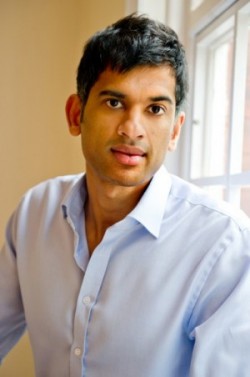
Dr Rangan Chatterjee qualified from Edinburgh University Medical School in 2001 and has been practising medicine ever since. He has completed Membership for the Royal College of Physicians as well as Membership for the Royal College of General Practitioners. Initially, he worked as a hospital doctor for 6 years and has spent the last 7 years working in General Practice. Rangan also holds a BSc Honours Degree in Immunology and is a member of the Institute of Functional Medicine in the United States where he has undergone extensive training. You can find out more about him on his website: Dr Chatterjee
 Dr Chatterjee was in conversation with Amanda Williams, Managing Director of Cytoplan. As she comments “I want to thank Dr Chatterjee so much for sharing some of his time with us for this fascinating article. Fortunately this is the first of a number of health articles by Dr Chatterjee that will be published on this blog in the coming months. If you have any particular health topics you are keen on him to cover do please let me know. And as always we encourage people to leave feedback to this article by using the ‘leave a reply’ option below”.
If you have any questions regarding this article, any of the health topics raised, or any other health matters please do contact me (Amanda) by phone or email at any time.
Amanda Williams, Cytoplan Ltd
amanda@cytoplan.co.uk
01684 310099
RELEVANT LINKS:
The Institute for Functional Medicine
Cytoplan Blog:
Nutrigenomics – Where nutrition meets genetics
We are what we eat? We are also what our mother ate at the time of conception
Our Genes throughout life – the importance of dietary components and Nutrition
Methylation: energy for life and living!