




Time-restricted eating - what is the ideal eating window? | By Jeannette Hyde
Will you lose weight and be healthier if you eat in a 12, 10 or 8- hour window of time each day? That is the question that has gripped the health world over since time-restricted eating (TRE) mice studies sparked excitement in this area (1, 2, 3, 4, 5). The good news is there is now research on humans to go on.
This blog is written by guest writer and nutritional therapist, Jeannette Hyde. After experiencing burnout as a journalist on a national newspaper, Jeannette now works with individuals and groups online offering bespoke protocols and support plans.
Time-restricted eating is a style of intermittent fasting (IF), where you swing between feast and famine like our ancestors. Unlike other styles of IF where you alternate between low-calorie days and eating what you want on other days of the week, TRE involves no calorie counting or hangriness (getting hungry and angry). You simply eat your normal diet in a set time slot each day and have a long overnight fast, much of which you’ll be asleep anyway.
The most popular TRE styles in the 24-hour clock are these:
- 8:16 (where you eat in an 8-hour slot and fast for 16 overnight)
- 10:14 (where you eat in a 10-hour slot and fast for 14 overnight)
- 12:12 (where you eat in a 12-hour slot and fast for 12 hours overnight)
Eating in a 10-hour daytime window (either 8am-6pm or 10am-8pm), followed by a 14-hour fast results on average in about half a stone/7 pounds/3.5kg over three months weight loss with no change to the content of diet (6, 7) probably because:
- Food from your last meal has been digested and absorbed. Stored glycogen sugar in your liver, has been used up too. This means the body starts breaking down fat for energy to fuel your organs during your sleep and power you along in the morning till you have breakfast.
- The body burns more fuel from food eaten earlier in the day than later – you have more time to burn the energy eaten as you go about your day, the thermogenic effect.
- Fasting can reset your hunger hormones (leptin and ghrelin), so you start to be able to recognise when you are hungry and full more easily and this leads to less over-eating.
- In studies, people generally consumed around 20 per cent less calories a day, without counting calories. This was because after they finished their 10-hour eating window (either at 6pm or 8pm) they automatically dropped the habit of snacking and alcohol on the sofa.
A Korean cross-sectional study (8) showed that men eating after 9pm, and doing long overnight fasts (more than 12 hours), and having less than 6 hours sleep, were more likely to be overweight, diabetic and have heart disease. The authors concluded that frontloading meals earlier in the day and having a quality sleep schedule and not eating after 9pm may help weight and metabolic health.
A randomised control study last year (9), where subjects fasted for 16 hours overnight and ate in an eight-hour window noon till 8pm, for three months, didn’t lose significantly more weight than subjects eating three meals a day when they wanted. The TRE group worryingly lost muscle mass. The authors concluded that the loss in lean muscle was probably because subjects ate less protein. One presumes that if they weren’t opening their eating window till noon, they were skipping breakfast which for many contains eggs which are rich in protein.
In my clinical practice I have come across people who when we first meet are frustrated and say that they aren’t experiencing weight loss from TRE. They have usually been trying to eat in an 8-hour window and can’t see the results they expected. Many (natural non-breakfast fans) can go all morning without eating or feeling hungry, and some even forget to start eating till 2pm or so. They then close the eating window at around 10pm with a glass of wine in front of the 10 o’clock news. This means they aren’t burning those late night calories going about their day, the digestive system strains to digest it, and hunger hormones aren’t getting the circadian clock reset that earlier day eating can give. Also the evening is when socially people are most likely to drink calorie-loaded alcohol.
Key takeaways:
To lose weight over three months through this gentle method – eating in a 10-hour time slot and fasting for 14:
- Eat either between 8am and finish eating by 6pm or between 10am and 8pm.
- Prioritise quality sleep.
- Remember to include protein in your meals.
Jeannette Hyde
 Jeannette Hyde is Registered Nutritional Therapist with a special interest in gut health, working with clients online one-to-one and in groups. She also runs health retreats abroad, and is a regular commentator on nutrition on the BBC and in print and online media. She has a BSc in Nutritional Therapy from Westminster University.
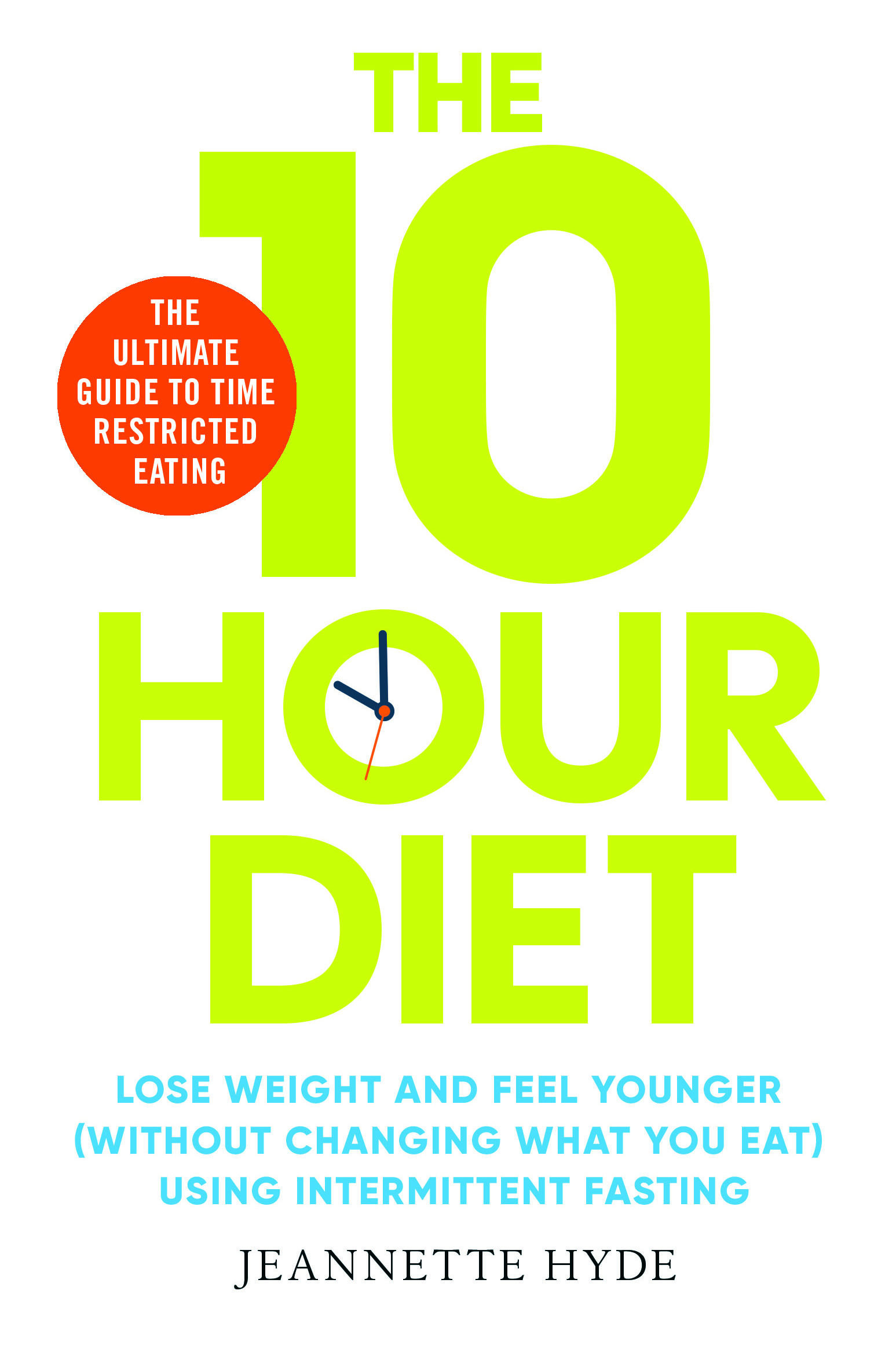 Jeannette's new book, The 10 Hour Diet can be ordered here and costs £8.99. It is published by Simon & Schuster on 21 January 2020.
You can receive more food and lifestyle tips on Jeannette’s Instagram @jeannettehyde or sign up to her newsletter at www.jeannettehyde.com to receive regular information on nutrition-related topics.
Jeannette's new book, The 10 Hour Diet can be ordered here and costs £8.99. It is published by Simon & Schuster on 21 January 2020.
You can receive more food and lifestyle tips on Jeannette’s Instagram @jeannettehyde or sign up to her newsletter at www.jeannettehyde.com to receive regular information on nutrition-related topics.
With many thanks to Jeannette for this blog. If you have any questions regarding the health topics that have been raised, please don’t hesitate to get in touch with Amanda via e-mail or phone: amanda@cytoplan.co.uk 01684 310099 Amanda Williams and the Cytoplan Editorial Team
References
- Hatori et al., ‘Time-restricted feeding without reducing caloric intake prevents metabolic diseases in mice fed a high-fat diet’, Cell Metabolism, Vol. 15 (2012): 848–860.
- Zarrinpar, A.; Chaix, A.; Yooseph, S.; Panda, S. Diet and feeding pattern affect the diurnal dynamics of the gut microbiome. Cell Metab. 2014, 20, 1006–1017, doi:10.1016/j.cmet.2014.11.008.
- Chaix, A.; Zarrinpar, A.; Miu, P.; Panda, S. Time-restricted feeding is a preventative and therapeutic intervention against diverse nutritional challenges. Cell Metab. 2014, 20, 991–1005, doi:10.1016/j.cmet.2014.11.001.
- Zarrinpar, A., Chaix, A., Panda, S., ‘Daily eating patterns and their impact on health and disease’, Trends Endocrinol Metab (2015). doi: 10.1016/j.tem.2015.11.007
- Wilkinson et al., ‘Ten-hour time-restricted eating reduces weight, blood pressure, and atherogenic lipids in patients with metabolic syndrome’, Cell Metabolism (2020). doi: 10.1016/j.cmet.2019.11.004
- Chow et al., ‘Time-restricted eating effects on body composition and metabolic measures in humans with overweight: a feasibility study’, Obesity (2020). https://doi. org/10.1002/oby.22756
- Anton, S., et al., ‘Flipping the metabolic switch: understanding and applying health benefits of fasting’, Obesity (2018). doi: 10.1002/oby.22065
- Ha and Song. ‘Associations of meal timing and frequency with obesity and metabolic syndrome among Korean adults’, Nutrients (2019). doi: 10.3390/nu11102437
- Dylan A. Lowe et al (2020). Effects of time-restricted eating on weight loss and other metabolic parameters in women and men with overweight and obesity The TREAT Randomized Clinical Trial. JAMA Internal Medicine. doi:1001/jamainternmed.2020.4153
- McHill et al., ‘Later circadian timing of food intake is associated with increased body fat’, American Journal of Clinical Nutrition (2017). doi: 10.3945/ajcn.117.161588

We’d love your comments on this article
It’s easy, just post your questions, comments or feedback below