


Do you suspect dairy intolerance?
A contentious issue in the nutrition community is whether dairy foods are good for us. As is sometimes found in nutrition, a food that works well and promotes health in one person may cause health issues in another.
Dairy products include milk, butter, cream, cheese, yoghurt, whey and ice cream. These foods are often used as ingredients in recipes and can appear in a variety of foods including soups, stock cubes, bread and also some medications. Dairy products can come from cow, sheep or goat’s milk with the majority of products in the UK made from cow’s milk.
As a food, dairy has a good nutritional profile providing some protein, carbohydrate and fat along with a range of micronutrients including calcium. For many people in the UK it is also an important source of iodine.
On the other hand, some people suffer and others are allergic to the proteins in dairy. This article explores the reasons why some people may experience negative health symptoms as a result of consuming dairy products.
Lactose intolerance
Lactose is a naturally occurring sugar (disaccharide) found in milk. Normally the body produces the enzyme lactase, which breaks lactose down into glucose and galactose, which are then absorbed from the gut into the bloodstream. Lactase is a beta-galactosidase enzyme that can be found on the upper surface of the enterocytes (gut cells) on the microvilli of the small intestine.2
Some people are unable to digest lactose and this produces uncomfortable symptoms, which may include wind, diarrhoea, bloating, stomach cramps and pains, stomach rumbling and feeling sick.1 The severity of symptoms often relates to the amount of lactose consumed.
People with lactose intolerance do not produce enough of the enzyme lactase, so lactose stays in the gut where it is fermented by bacteria. The fermentation process produces various gases (a mixture of hydrogen, methane, and carbon dioxide) which contribute to the symptoms of lactose intolerance.3 The unabsorbed sugars and fermentation process raise the osmotic pressure of the colon, creating an increased flow of water to the bowels, which may lead to diarrhoea.
The degree of lactose intolerance will depend on how much lactase is present, the dose of lactose consumed, the composition of the gut microflora, gastrointestinal motility and sensitivity of the gastrointestinal tract in the generation of gas and other fermentation products of lactose digestion.4
Overall, lactose intolerance is a consequence of lactase deficiency, which may be:
Primary – genetic disorders. Primary hypolactasia only affects adults, and is caused by the absence of a lactase persistence allele which causes less lactase to be produced over time. Primary congenital alactasia is rare and affects lactase expression from birth, meaning that infants cannot tolerate lactose in breast milk or formula.5
Secondary – environmentally induced from damage to the small intestine that may cause a decrease in lactase activity. Damage may be due to gastrointestinal infections, inflammatory bowel disease, coeliac disease, severe malnutrition, some medications or abdominal surgery.2
There appears to be a genetic component to lactose intolerance, and in the UK it is more common in people of African-Caribbean or Asian descent. It can occur at any age, but commonly occurs in people between the ages of 20 and 40, however babies and young children can also be affected.3
Lactose intolerance may be tested by hydrogen breath testing, blood testing, stool acidity testing and intestinal biopsy.
If lactose intolerance is identified, then avoidance of lactose results in remission of symptoms. There are varying amounts of lactose in different dairy products so some people can manage small amounts of lactose containing dairy and others are very sensitive to even small quantities. There are now a variety of lactose-free dairy products available in supermarkets. Enzyme supplementation (giving lactase) may also help in the break down of lactose and provide symptom relief whilst consuming dairy products.
Lactose intolerance may also be part of a wider intolerance to FODMAP carbohydrates (fermentable oligo-, di-, monosaccharides and polyols). This is present in at least half of patients with irritable bowel syndrome (IBS) and these people require not only restriction of lactose intake but also a low FODMAP diet to improve gastrointestinal complaints.6 Intolerance to FODMAPs may suggest small intestinal bacterial overgrowth (SIBO) in the gut and addressing this may improve gut symptoms and tolerance to FODMAP foods, such as lactose.7
For some people, it has been suggested that regular consumption of dairy foods containing lactose may promote colonic bacteria adaptation, allowing people with primary lactase deficiency to reduce their intolerance and to consume more dairy foods.8 The way to induce tolerance is based on progressive exposure, consuming small amounts of lactose foods frequently, distributed throughout the day. 8
Recently probiotics have been proposed to play a role in supporting the management of lactose intolerance - certain probiotic strains have shown beta-galactosidase activity and may help in digesting lactose.2 Both Lactobacillus acidophilus and Lactobacillus reuteri have been shown to be effective in clinical trials. 9–11
Cow’s milk protein allergy
Hypersensitivity to cow’s milk proteins is one of the main food allergies and affects mostly (but not exclusively) babies and young children, while it may also persist through adulthood and can be very severe. Between 5 and 15% of infants show symptoms that suggest milk protein allergy.12 Different clinical symptoms of milk allergy have been established and these include urticaria, vomiting, acute dermatitis, hives and swelling of the skin and mucus membranes e.g. lips, mouth. These symptoms usually occur within two hours of exposure to cow's milk protein, whereas other symptoms like atopic dermatitis and gastrointestinal disturbances may occur later.13 Cow’s milk protein allergy can develop in exclusively and partially breast-fed babies, and when cow’s milk is introduced during weaning.12
Symptoms of cow’s milk protein allergy occur often, but not always, within the first weeks after the introduction of cow’s milk. Many children with milk protein allergy will develop symptoms in at least two of the following organ systems: gastrointestinal (50–60%), skin (50–60%) and respiratory tract (20–30%).12 The symptoms can range from mild to moderate to severe; symptoms may put the infant in immediate life-threatening danger (such as anaphylaxis) or may interfere with the child’s normal growth and development. The majority of children outgrow milk allergy, but for about 0.4% the condition persists into adulthood.1
The diagnosis of milk allergy differs widely due to the variety of symptoms, and can be achieved by skin or blood tests. Cow’s milk contains more than 20 proteins (allergens) that can cause allergic reactions. Casein fractions and beta-lactoglobulin (the main whey protein) are the most common cow’s milk allergens.14
Milk allergy can be either immunoglobulin E (IgE) or non-IgE mediated. IgE-mediated reactions typically occur immediately after ingestion whereas non-IgE mediated are delayed and take up to 48 hours to develop, but still involve the immune system.1
A1 beta-casein intolerance
Beta-casein proteins make up approximately 30% of the total protein of cow’s milk and may be present as one of two major genetic variants: A1 and A2. The latter (A2 beta-casein) is recognised as the original beta-casein variant because it existed before a mutation caused the appearance of A1 beta-casein in some European herds around 5000 years ago. Now the majority of our milk and milk products come from A1 beta-casein cows.
Once milk or milk products are consumed, the action of digestive enzymes in the gut on A1 beta-casein releases the bioactive opioid peptide BCM-7. In contrast, A2 beta-casein releases much less and probably minimal amounts of BCM-7 under normal gut conditions. There is now an increasing body of evidence that cow beta-caseomorphin-7 (BCM-7) is also an important contributor to milk intolerance syndrome.15
Therefore some people find that A2 milk is better tolerated. A2 milk is available more widely in Australia and the USA, but can be found in the UK specifically as gold-topped Jersey cow’s milk.
Some people report tolerating sheep or goat’s milk dairy products better than cow’s milk. This may be due to the casein and lactoglobulin types.
Caseins in milk of different species differ in fraction, number and amino acid composition. Beta-casein is the major fraction in goat casein, which is similar to human casein and different from cow casein.16 Hence for people who find they can tolerate goat’s milk better than cow’s milk it may be due to the different type of casein. Breast milk is free of beta-lactoglobulin, and is similar to camel milk.16
Allergies to milk proteins of non-bovine mammals have also been documented due to allergic cross reactivity between cow's milk proteins and their counterpart in other species, and even between goat and sheep caseins.16 Individuals with reactions to specific allergens in food (or inhalants such as pollen) can be known to develop allergy to different foods (or substances) containing either the same allergen, or an allergen with a very similar protein structure (allergic cross-reactivity).17
Gluten cross reactivity
Certain amino acid sequences in dairy proteins share similarities with gluten. This can result in people who have coeliac disease, who are consuming dairy, continuing to show a gluten type reaction, even when gluten has been removed from the diet. Casein is similar to the gliadin protein found in gluten. In fact, at least half of those people who are gluten intolerant are also intolerant to dairy. This intolerance could be due to casein cross-reactivity or due to damage to the gastrointestinal tract resulting in low levels of lactase (i.e. lactose intolerance).
Dairy-free milks
Removing dairy from the diet is much easier than it used to be. There are now many plant-based milks, yoghurts and cheeses available and recent market research by Mintel found that a quarter of British people are now drinking non-dairy milks, with the biggest users being 16-24 year olds. Reasons for the switch include health and environmental impact. Nevertheless, dairy milk sales still account for 96% of the market with plant-based milks making up just 4%.20 Plant-based milks include soya, oat, almond, hemp, rice and coconut milk. There are some downsides to many of these milks – for example:
- some contain added sugar
- additives e.g. thickeners may be used
- whilst fermented soy, as a food, has some benefits, there are concerns about consuming larger amounts (e.g. drinking soya milk)
- concerns have been raised about low levels of arsenic in rice milk
Non-dairy sources of calcium
One concern for people who exclude dairy is the amount of calcium in the diet. However there are plenty of non-dairy sources of calcium including dark green leafy vegetables (e.g. broccoli, pak choi and kale), almonds, sesame/chia and sunflower seeds, tinned sardines/salmon with the bones mashed in, white beans, black beans and dried figs. In addition, plant-based milks are available fortified with calcium (although they usually include poorly absorbed calcium carbonate or calcium phosphate).
Calcium from dairy is not well absorbed so, regardless of whether it is included or excluded in the diet, it is a good idea to include non-dairy sources as well.
Is calcium supplementation necessary on a dairy-free diet?
This will depend on the quality of the diet as well as the age and sex of the person. Children, pregnant, lactating and postmenopausal women have increased calcium needs so particular care in formulating appropriate diets is needed.
In our opinion people should not need to supplement with very high doses of calcium, if calcium supplementation is indicated then 200 to 400mg should be sufficient for most people. The form of calcium used is of key importance: Wholefood calcium from organic calcified seaweed has a porous and hydrolysed surface area because of years in the ocean and this helps it to be very soluble in the acid of the stomach permitting good uptake.
On the other hand excessive intakes of calcium (such as high dose calcium carbonate supplements) have been linked to increased incidence of heart, circulatory and other diseases. This is because, at high doses, calcium can be deposited in soft tissues, for example the arteries and kidneys, and contribute to arterial calcification and kidney stone formation.20 On the other hand, there has also been research showing that low calcium intake is associated with increased risk of cardiovascular disease.
Other considerations to support calcium absorption and utilisation in the body are vitamin D, vitamin K and magnesium. Vitamin D is needed for calcium absorption and vitamin K2, together with magnesium, regulate calcium deposition; they promote the calcification of bones rather than soft tissues.
- Lactose is a naturally occurring sugar (disaccharide) found in milk. In some people the body is unable to digest lactose and this produces uncomfortable symptoms, which may include wind, diarrhoea, bloating, stomach cramps and pains, stomach rumbling and feeling sick.
- Hypersensitivity to cow’s milk proteins is one of the main food allergies and can be life-threatening.
- Cow’s milk contains more than 20 proteins (allergens) that can cause allergic reactions. Casein fractions and beta-lactoglobulin (the main whey protein) are the most common cow’s milk allergens.
- Beta-casein proteins make up approximately 30% of the total protein of cow’s milk and may be present as one of two major genetic variants: A1 and A2. Now the majority of our milk and milk products come from A1 beta-casein cows. Some people find that A2 milk is better tolerated. A2 milk is available more widely in Australia and the USA, but can be found in the UK specifically as gold-topped Jersey cow’s milk.
- Casein is similar to the gliadin protein found in gluten. At least half of those people who are gluten intolerant are also intolerant to dairy. This intolerance could be due to casein cross-reactivity or due to damage to the gastrointestinal tract resulting in low levels of lactase (i.e. lactose intolerance).
- Good choices of plant-based milk alternatives include coconut milk and almond milk (however, when choosing a brand check the ingredients list for sugar and other additives).
- Non-dairy sources of calcium include dark green leafy vegetables (e.g. broccoli, pak choi and kale), almonds, sesame/chia and sunflower seeds, tinned sardines/salmon with the bones mashed in, white beans, black beans and dried figs.
- With a carefully planned diet, it is possible to obtain adequate calcium. Certain sectors of the population have increased calcium needs – these include children, pregnant and lactating, and post-menopausal women.
- If supplementing with calcium 200 to 400mg per day of a well absorbed source, such as Wholefood calcium from calcified seaweed, should be sufficient for most people.
If you have questions regarding the topics that have been raised, or any other health matters, please do contact me (Clare) by phone or email at any time. clare@cytoplan.co.uk, 01684 310099 Clare Daley and the Cytoplan Editorial Team
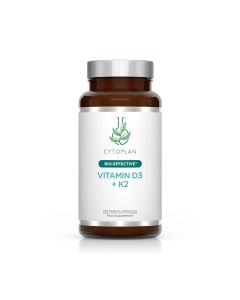
Relevant Cytoplan Products Cyto Gold – A one-a-day Food State™ multivitamin and mineral which includes Wholefood calcium from calcified seaweed. Wholefood Calcium - A natural multimineral seaweed product harvested off Ireland's southwest coast. It is an organic wholefood supplement which yields 200mg of elemenal organic calcium per capsule and contains no additives. Bone Support – A multi-nutrient formulation specifically tailored for those who are concerned about bone health and bone mineral density. Provides calcium along with nutrients important for bone health including magnesium, boron, vitamin D3 & K2. Vitamin D3 & K2 - Contains 100ug of vitamin D3 as cholecalciferol from a vegetarian source and 100ug of vitamin K2(MK-7), and is designed to support levels of vitamin D and K2. Cytobiotic Active Powder – A dairy-free probiotic powder containing eight live native bacterial strains, plus a small amount of inulin and fructooligosaccharides.
References
- Walsh J, Meyer R, Shah N, Quekett J, Fox AT. Differentiating milk allergy (IgE and non-IgE mediated) from lactose intolerance: understanding the underlying mechanisms and presentations. Br J Gen Pract. 2016;66(649):e609-11. doi:10.3399/bjgp16X686521.
- Fassio F, Facioni MS, Guagnini F. Lactose Maldigestion, Malabsorption, and Intolerance: A Comprehensive Review with a Focus on Current Management and Future Perspectives. Nutrients. 2018;10(11). doi:10.3390/nu10111599.
- Deng Y, Misselwitz B, Dai N, Fox M. Lactose Intolerance in Adults: Biological Mechanism and Dietary Management. Nutrients. 2015;7(9):8020-8035. doi:10.3390/nu7095380.
- He T, Venema K, Priebe MG, Welling GW, Brummer R-JM, Vonk RJ. The role of colonic metabolism in lactose intolerance. Eur J Clin Invest. 2008;38(8):541-547. doi:10.1111/j.1365-2362.2008.01966.x.
- Ingram CJE, Mulcare CA, Itan Y, Thomas MG, Swallow DM. Lactose digestion and the evolutionary genetics of lactase persistence. Hum Genet. 2009;124(6):579-591. doi:10.1007/s00439-008-0593-6.
- Altobelli E, Del Negro V, Angeletti PM, Latella G. Low-FODMAP Diet Improves Irritable Bowel Syndrome Symptoms: A Meta-Analysis. Nutrients. 2017;9(9). doi:10.3390/nu9090940.
- Ghoshal UC, Shukla R, Ghoshal U. Small Intestinal Bacterial Overgrowth and Irritable Bowel Syndrome: A Bridge between Functional Organic Dichotomy. Gut Liver. 2017;11(2):196-208. doi:10.5009/gnl16126.
- Szilagyi A. Adaptation to Lactose in Lactase Non Persistent People: Effects on Intolerance and the Relationship between Dairy Food Consumption and Evalution of Diseases. Nutrients. 2015;7(8):6751-6779. doi:10.3390/nu7085309.
- Almeida CC, Lorena SLS, Pavan CR, Akasaka HMI, Mesquita MA. Beneficial Effects of Long-Term Consumption of a Probiotic Combination of Lactobacillus casei Shirota and Bifidobacterium breve Yakult May Persist After Suspension of Therapy in Lactose-Intolerant Patients. Nutr Clin Pract. 2012;27(2):247-251. doi:10.1177/0884533612440289.
- Ojetti V, Gigante G, Gabrielli M, et al. The effect of oral supplementation with Lactobacillus reuteri or tilactase in lactose intolerant patients: randomized trial. Eur Rev Med Pharmacol Sci. 2010;14(3):163-170. http://www.ncbi.nlm.nih.gov/pubmed/20391953. Accessed December 12, 2018.
- Pakdaman MN, Udani JK, Molina JP, Shahani M. The effects of the DDS-1 strain of lactobacillus on symptomatic relief for lactose intolerance - a randomized, double-blind, placebo-controlled, crossover clinical trial. Nutr J. 2015;15(1):56. doi:10.1186/s12937-016-0172-y.
- Høst A. Frequency of cow’s milk allergy in childhood. Ann Allergy Asthma Immunol. 2002;89(6 Suppl 1):33-37. http://www.ncbi.nlm.nih.gov/pubmed/12487202. Accessed December 12, 2018.
- Vandenplas Y, Koletzko S, Isolauri E, et al. Guidelines for the diagnosis and management of cow’s milk protein allergy in infants. Arch Dis Child. 2007;92(10):902-908. doi:10.1136/adc.2006.110999.
- Sélo I, Clément G, Bernard H, et al. Allergy to bovine beta-lactoglobulin: specificity of human IgE to tryptic peptides. Clin Exp Allergy. 1999;29(8):1055-1063. http://www.ncbi.nlm.nih.gov/pubmed/10457108. Accessed December 11, 2018.
- Pal S, Woodford K, Kukuljan S, Ho S. Milk Intolerance, Beta-Casein and Lactose. Nutrients. 2015;7(9):7285-7297. doi:10.3390/nu7095339.
- El-Agamy EI. The challenge of cow milk protein allergy. Small Rumin Res. 2007;68(1-2):64-72. doi:10.1016/J.SMALLRUMRES.2006.09.016.
- Bonds RS, Midoro-Horiuti T, Goldblum R. A structural basis for food allergy: the role of cross-reactivity. Curr Opin Allergy Clin Immunol. 2008;8(1):82-86. doi:10.1097/ACI.0b013e3282f4177e.
- Månsson HL. Fatty acids in bovine milk fat. Food Nutr Res. 2008;52. doi:10.3402/fnr.v52i0.1821.
- Food Composition Databases Show Foods -- Butter, without salt. https://ndb.nal.usda.gov/ndb/foods/show/132. Accessed December 10, 2018.

We’d love your comments on this article
It’s easy, just post your questions, comments or feedback below